

What Happened To The AHHB

Words by Phil Chard
As a writer, the temptation is to find some profound and verbose thing to say when a simple explanation will suffice.
That explanation is this - shit happens. As it goes when shit happens it tends to follow Murphy's Law.
For those that followed and supported The African Hip Hop Blog, you may have noticed the two-year hiatus on content. One of our former contributors Ts'eliso Monaheng documented our untimely and unexpected closure here.
In summation, life caught up to us all and shit happened.
Ross, Twaambo and I never planned nor wanted to shut down. However, we were haemorrhaging money and we could no longer afford to. As a business, The African Hip Hop Blog was not a profitable one. But that was by design.
When Ross started this platform as 25toLyf it was because he was someone who loved music and wanted to promote it. Whether it was his childhood friends from the original 25toLyf clique and Mob Movers or an artist who emailed a submission - he sacrificed time and money simply because he wanted to invest in his passion. When Twaambo and I joined the team, we did so for love. We gladly sacrificed countless hours building the brand because that is what our passion dictated.
I fondly remember the times where I would finish work and stay in the office until 10 pm reviewing submissions and writing articles. Or the countless weekends I sacrificed to review an album and prepare a Mixed Bag Monday post. Not once did we never think about money. We were young and loved African music. We could see the movement that was taking shape and we wanted to be part of it. Being able to share that passion was rewarding enough.
Our readers saw that passion too. We grew from a few hundred visitors every month to thousands and eventually millions. Part of that was the content and part of it was due to the brilliance of Twaambo and his SEO skills. If we wrote about it, guaranteed we were always on the first page of Google.
As we grew the investment grew. Once again, we never questioned the money. I remember not questioning the need to spend my savings on equipment or to travel across borders for an event.
At this point, the blog had become bigger than we expected or planned for. But, probably because of naivety we still never considered the money. To us, money in content represented everything wrong with the culture. It softened critiques, it watered down opinions, it violated the trust we had built with our readers.
I recall a time when an alcoholic brand was doing a co-branded campaign with a Hollywood movie. They approached us to be part of the campaign and we turned the money down without batting an eyelid. Our reasoning - "this brand and movie don't have anything to do with Hip Hop. We can't sell out." Even back then the amount offered was substantial - buy a nice car substantial. Yet somehow, we didn't think twice. It's surreal to reflect on that level of blind naivety and passion. Sometimes I cringe at the youthful ignorance of it all.
There were more brands, more offers, from online clothing retailers to electronic companies. All of whom didn't meet our exacting and non-descript standards.
But like a living organism, the blog kept growing, even without our coaxing. Submissions kept multiplying. By 2017 we were receiving upwards of 200 submissions a week. Our inboxes were overloaded. So much so we had to design a proprietary submission tool.
Writers began contacting us. Events wanted to partner with us. It was no longer a side project; our baby had grown into a full-time responsibility. Still, the passion remained. Sadly, our ideals did not evolve. Well not fast enough to stay afloat.
In a few years, the blog had gone from costing us a few hundred dollars to several thousand. Eventually, we pivoted and began taking on advertising and brand deals. But we were still selective, still naive. We partnered with brands like Multichoice, Sprite, Absolut Vodka, Vodacom and many more. We're eternally grateful for their support but that support couldn't stem the tide.
While this was happening, we were all getting older, we all had more responsibilities, more demanding jobs, more bills, more of life's hurdles to overcome.
We couldn't keep the momentum going and we all decided that a break was needed. A new strategy and business model needed to be crafted. During this time, I stopped checking blog emails. The thought of tackling that ever-growing mountain of unread messages would induce a panic attack. I doubt any of us checked, the thing we loved so much had become a job, a stressful job where the paycheques were going the wrong way. It was during this time a payment to our host lapsed and the unfortunate events detailed in the article referenced above occurred.
Without warning our baby was gone. We didn't want to lose her. At the time I was in a fellowship under the guidance of some brilliant minds in the hopes of developing a business strategy that would work and scale for the blog
But it was too late the data was gone and unrecoverable.... kinda. We still do have a text backup of the site which I am manually restoring. The AHHB will return and visitors will no longer be met with an “Under Construction” landing page. We feel we owe that to you, the readers, the artists and the writers who spent hours building this brand.
Point Black: The Next Chapter

You may ask. What is this website? What is Point Black? Why have the social media handles for the @AfricanHHB changed? Well, this company was created partly because of the blog. Once we realised an entity needed to be formed to receive payments and develop campaigns for clients we formed Point Black. Even though the team has moved on - Ross is now working in the upper echelons of the music industry and Twaambo founded one of the biggest music platforms in Zambia. We still work together, and we share a common goal - to promote African content and African creatives.
Our passion never wavered; our love never waned. We just needed to rethink things. Even when the blog was operational, I could not see a viable business model for online content that allowed us to maintain our independent voice, create high value editorial content and meet our costs. We saw how brands would buy articles, how artists would try swing for favourable reviews. We saw the click-bait headlines and the web pages so overrun with ads they were impossible to navigate. We wanted no part of that game, so we consciously took our ball home. We left the game, but we planned to return.
After 2 years of plotting a way forward, this is our next chapter. For now, The AHHB will remain as a backup of all the content we created before Digital Ocean chose to nuke it without warning. In its place Point Black will continue to work on promoting artists across the continent, building this creative industry, and telling our stories.

Our first major project in this chapter is The Pungwe Sessions Volume 2. It has been 6 years in the making and the team here has worked tirelessly to make it happen. We hope you will continue to support us on this new chapter the same way you did before.
To everyone that made The African Hip Hop Blog the award-winning, culture-shifting giant that it was, thank you. From the readers to the professors who referenced us and the artists that trusted us with their work. Thank you.
To the writers who contributed - Ts'eliso Monaheng, Sabelo Mkhabela, Mayuyuka Kaunda, Shingai Darangwa, Simon Mudimu, Christine Rupiah, Lombe Kabinga, Philani Dlamini, Ross Hagan, Twaambo Haamucenje and anyone else who contributed, thank you. You have all moved on to bigger things and if it weren't for you this amazing ride would have ended far sooner.
AHHB for Life!
Also, backup your shit. Then back up that backup.


Africa’s Digital Distribution Conundrum: iTunes Isn’t The Answer
Words by Phil Chard
Africa is continent hampered by underdevelopment and failing bureaucracies. Yet, it also finds ways to lead the charge towards new technologies and systems.
Take the mobile banking revolution and how systems like Mpesa have revolutionised not only mobile banking, but the the way in which the populace transacts in East Africa for instance. The barrier of entry into the formal system for the average working class African was too high, so a cheaper and more convenient way was created..That revolution was spurned because of a need within the banking sector.
The same parallel can be drawn for the music industry. As the majority of African nations transitioned from colonial rule to independent states, the Western record labels that had set up shop decided to leave the playground and take their toys with them. What remained were disjointed music industries with no means to produce and distribute works en masse. Demand for this music never waned. What happened was that the ability to sell it effectively was abruptly removed. When demand exceeds supply, someone will find a way to meet those needs. In this case it was pirates. As technology developed, it became easier for pirates to become the main source of distribution for music fans who just wanted to listen to the music they loved.
It seems artists are playing an exhausting game of whack-a-mole. Once one problem is tackled, another one pops up.
Artists have struggled to keep up with pirates; how could they? Pirates had the distribution models, they had the customer base, they had already scaled their businesses up and were enjoying returns on the investments they made in the equipment they used to reproduce content cheaply. For an artist, playing catchup was a steep ask. From printing CDs, to finding fans, to finding ways to compete with pirates on price and distribution. Most artists just threw in the towel and resigned themselves to working with pirates to get the music to the ears that wanted to hear it. This was the case with Nigeria’s Alaba Markets. Artists would enter into deals with pirate and sell them the masters of their new music at a discounted rate. The pirates would then leverage their resources to distribute and sell this music. That tactic speaks to the ingenuity of Africans - instead of engaging in a losing battle with pirates , artists decided to recruit the pirates as their distributors.
Technology has now leaped forward. Artists and pirates are on almost identical footing now. Almost...
With digital distribution options, artists can distribute their music to hundreds of musical stores instantly with the upload of a .wav file and the click of a few buttons. They can reach their social media fans instantly with one post, and they can share that content with blogs and media publications by e-mailing them a press release. With digital distribution. artists can now reach their fans just as effectively and easily as the pirates can. Pirates still have the upper hand though, and it’s price. You can’t undercut someone selling a product for free. Piracy still thrives because the new pirates are blogs and torrent sites who make money on advertising impressions and not sales.
Read my Detailed Analysis On The Issue Of Piracy Here
It seems artists are playing an exhausting game of whack-a-mole. Once one problem is tackled, another one pops up.
So how do artists use digital distribution to ensure that their music is reaching fans across the world while simultaneously guaranteeing that these fans can pay for it easily and the artist can be rewarded for their efforts?
OK let's discuss. All about solutions. Shoutouts to you for coppin it via mobile money tho. https://t.co/eWuL9Esl5l
— M.anifest (@manifestive) March 16, 2017
Enter iTunes, the music solution pioneered by the turtleneck advocate and revolutionary Steve Jobs. iTunes sparked the revolution that shifted the entire Western music industry on its head towards a movement commonly referred to as “the unbundling of the album”. Before iTunes, artists and labels made their money from selling albums. The formula was simple:. Create 1-4 standout singles to place on the album and drive interest. Fill the rest with whatever you could and watch the money roll in as every fan was forced to pay for the full album even if they only wanted to hear 1 or 2 songs on the project. iTunes changed that. Fans could buy only the songs they wanted to hear. Obviously this was bad for record label business and good for the fans.
Eventually, the labels adjusted their strategies. Cohesive albums have now taken a backseat while singles have taken over. Albums are often held back until the artist can produce a commercial hit to back the effort. I have spoken to several artists who have had projects shelved for years because of this. Based off of a MIDiA research study, which found that streams originating from playlists were 20 times greater than streams from end-to-end listening of an album and nearly three times the number of streams from albums, one could argue that the labels have a point.
A look at how artists like AKA are releasing music shows the shift to singles, and the the depreciation of albums
In recent years we've seen African artists shift their attention to iTunes as the solution to distribution.. This has become even more apparent with Apple Music now setting its sights on Africa. Artists like Mr Eazi have partnered with the platform to promote his project. We've also seen artists now refer to iTunes chart position as the defacto measurement of success.
On paper it makes sense; iTunes is one of the planet's biggest online music platforms. Some might argue that it's ubiquitous, and in some cases has become the premier channel for digital music. Apple ships millions of phones every quarter, while iTunes’ market cap accounts for billions of dollars.
Though true, iTunes domination in the USA or Europe does not translate to Africa. In 2015, Apple iPhone devices only accounted for 2.2% of the mobile market in the Middle East & Africa and only 7.9% of the devices in South Africa. At best, an African artists is only reaching between 2-8% of their potential fan base. On a continent with only 362 million active Internet users (29% of the population) and only 226 million with smartphones (this figure includes Android, Windows Phone, iPhone and Blackberry) it makes little sense to use iTunes to reach the masses.
In Africa these are the steps a fan needs to go through before they can make an iTunes purchase
Purchase an iPhone (Prices for the current model iPhone 7 start at $750 USD).
Have access to a fast and reliable, preferably unlimited Internet connection. Prices may vary depending on your region.
Possess an approved credit card, or have access to iTunes vouchers
Be prepared to part with $1USD for every single and $10 USD for every album (Prices do vary by region)
Despite the highly exclusionary nature of iTunes, the pricing model in the store makes no sense for Africa. iTunes has simply tried to replicate the model it uses in the West here, and it won't work in Africa. Simply, people can't afford it. Owning an iPhone and having the disposable income to purchase music regularly on the platform is an extreme sport in Africa. The cost of the phones and steps needed to create the account, plus the cost of data, does not translate into something that will gain critical mass.
Apple remain tight-lipped about their numbers, they always are.
A few months ago, while trying to gain insight into the African music charts, I began a tracking the iTunes singles and albums charts in Nigeria, South Africa and Kenya via a service called Soundcharts. What I discovered was that sales for African acts across the continent were embarrassingly low on iTunes. I spoke about my findings in detail on Twitter, and you can review them below. International albums that are as old as 20 years are regularly outselling new local releases. What this shows is that Africans simply aren't buying music on iTunes, and it’s mainly due to the reasons I have mentioned above.
ITunes Charts Are Useless - Curated tweets by PhilChard
To their credit, Apple has tried to address the pricing issue by allowing prices in local iTunes stores to reflect the “expected” rates of that particular region. I recently switched from an American iTunes account to a South African account because I would pay half the price for my Apple Music subscription and save about 30% on music purchases after converting.
The fact remains: iTunes is not a solution to reach the masses. It's a niche service for high-value fans willing to pay a little more for convenience.
How Can iTunes Change This?
If iTunes aims to become the platform of choice for African fans, the company needs to have an iTunes app for Android. Getting Apple Music on Android was a smart move and a critical first step that introduced the Apple ecosystem to Android users and enthusiasts, similar to how iTunes introduced itself to Windows users when it launched for Windows in 2003. Once you have people in your ecosystem, making purchases and building their libraries in iTunes, they are less likely to leave.
I'm the perfect example of this. I have been an ardent Windows user since birth. In 2004 I switched from Windows Media Player and Winamp to iTunes. I have spent thousands of dollars in the iTunes store on music. Despite being an Android enthusiast I would use an iPhone as a second phone simply because I was so entrenched in the iTunes ecosystem.
I type this in a very tongue-in-cheek fashion. I know iTunes will most likely not introduce any of these steps, and I don't blame them. Their business is running smoothly without my help. With over $216 Billion in cash reserves, they can be forgiven for not focusing their sights too hard on Africa.
And that's the point.
Apple doesn't have to adapt its services for Africa. The Apple brand is so big they can still afford to operate as an exclusive brand with attractive operational margins. Apple, and iTunes by extension, have planted their flag on the continent and demanded that we adapt to their culture. So why are we trying to do so? It's a square peg for a round hole. Why do African artists miss this? iTunes shouldn't be your focus when number one albums can be crafted with a handful of purchases. No chart is a true reflection of the culture if albums released two decades ago are your biggest competition.
Ensuring your music is on iTunes and being promoted on the platform should certainly be part of an African artist’s strategy, but it certainly shouldn't be the main focus. The majority of your fans aren't on iTunes. The answer to where they are is more complex; there is no one platform that enjoys continental domination. This is where artists have the opportunity to band together and create custom solutions for their fanbases.
What Diamond Platnumz has done in Tanzania is launch a webstore for his record label Wasafi. You can purchase music from Wasafi artists and other Tanzanian acts on it. The site is still glitchy when trying to process international card payments, and it certainly isn’t the panacea we are hoping for. But it is a workable, scalable solution for Africa.
As it stands, telcos seem to be leading the charge towards finding a ubiquitous system for music purchases. Several elcos are replicating the MTN model.
But can we, should we, trust telcos to help carry us to the promised land? Recent history would suggest no. COSON is suing MTN for $80 million dollars for non payment of publishing royalties. Tigo Tanzania was ordered to pay AY and MwanaFa close to $1 million dollars in a copyright dispute.
Until changes are made and real growth is experienced, iTunes charts in Africa will hold the same weight as my 25-metre breaststroke certificate from 1992 that my mother hangs on her office wall. It's a cute achievement, a source of pride that she uses as a conversation starter with friends. But in the grand scheme of things, it doesn't mean shit.

AKA’s Video For The World Is Yours Shows His Intent To Build His IIIRD WRLD Brand
Words By Phil Chard

The Supa Cala Fragilistic Mega just dropped his new video for his single The World Is Yours. Shot in Phuket, Thailand during his baecation with Bonang (who also makes a cameo) the video features scenes cliff side villas with infinity pools overlooking the sea, night time to shots of the country's famous markets and boat tours that have me looking out my office window solemnly.
The biggest takeaway from this video is how AKA has begun to make a concerted effort to develop his IIIRD WRLD brand. After attempting and failing to get out of his contract with Vth Season, AKA has been making an effort to establish his personal and company brands separate from his label.
In April last year long before the tweet trades aimed at Benza and Co, AKA launched the audio slide for his Dreamwork on IIIRD WRLD . Up until that point IIIRD WRLD had been something of a forgotten asset. The platform had launched about three years ago with much hype from AKA and Da L.E.S but quickly became a blog that merely reposted content from international sites. Eventually the site just stopped being updated and it no longer seemed to be a priority for the artists anymore.
However in 2017 AKA seems more focused on building his brand. the website now contains all of his music and even had banner ads for an energy drink! He also has his own cameraman who not only supplies AKA with high quality images for his Instagram page but has also been producing mini behind the scenes documentaries of AKA which are now being hosted on his IIIRD WRLD YouTube page.
Right now it is all speculation as to whether or not AKA is still intent on leaving Vth Season. I've been given a lot of information on the issue but until it's confirmed it is merely hearsay. What I do know is that this is the right direction for AKA and his brand and other artists should take note. AKA has also been building his Supa Mega clothing line which he sells at his SUpa MEga branded shows. Always look to build your brand on your own. Don't rely on anyone to do it for you.

AHHB R&D | Producing Your Own Music Video Part 4
Words By TNGlive

In part 4 we’re looking at the various formats you’ll want delivery of, from your editor, for your music video product to be ready for distribution.
You can revisit the preproduction stage , recap your responsibilities during production, and review what we discussed in part 3 in regards to useful things to know in your capacity as producer during the post production stage, in order to make sure you’re getting the best value for your investment.
So, now your colourist has returned the file to your editor, and the cut is ready to be delivered to you. Let’s look at a checklist of the formats you’ll have to make sure you’ve secured, or at least be aware of. You might already know your way enough around your edit suite of choice, and you’re confident you’ll be able to open the file and churn out whichever format you need, our checklist will help you stay organized.
This checklist consists of different typical exhibition platforms you may want your audience to go to, in order to view your music video.
Youtube: The young generation’s current first preference for streaming music.
Delivery Specifications
Preferred Video codec : H.264. Recommended Video Bitrate (for 24, 25, 30 frames per second): minimum 1 Mbps for 360p, maximum 35-45 Mbps for 4K. Recommended Audio Codec : MPEG Layer 2 or Dolby AC-3. Recommended Audio Bitrate: 128kbps for mono. 384kbps for stereo. 512kbps for 5.1
Where to deliver?
Through the upload button on your Youtube page when signed in.
iTunes/Apple Music: An underrated platform for monetising your music videos. Remember banking the cents makes sense?
Delivery Specifications: It's important to note that all music videos must begin and end with at least one black frame.
Recommended Video Codec : Pro Res 422 HQ. Expected Video bit rate is approximately 220 Mbps. Frame rate: 24 or 25 progressive frames per second. Resolution: 1920 x1080. The HD file can be delivered matted (letterboxed), or could be delivered full frame with metadata encoded to specify the crop rectangle. The audio must be 5.1 (if available), 16-bit or 24 bit, at least 48kHz. Alternatively it must be MPEG-1 Layer 2 Stereo, 384kbps, 48 Khz, included in the same file as the delivered video.
A Music Video Screen Capture Image is required. This can be an unconstrained JPEG (.jpg), or PNG (.png), RGB Screen standard (CMYK print standard images will not be accepted). Minimum dimensions, 640 x 100.
Where to deliver? Click here for the list of content partners that can get your music video onto iTunes/Apple Music.
MTV Base: TV still matters a great deal in Africa when it comes to increasing brand value.
Delivery Specifications: Format: (SD/HD) .mov. 25 frames per second. Acceptable Codecs: Apple Pro Res 422 HQ, XDCAM HD422 1080i 50 (50mb/s), XDCAM HD720 p25 (50mb/s), MPEG IMX 625/50 (50mb/s), DV PAL, HDV 1080i50, HDV 720p25, DVCPRO 50 PAL. Audio: Stereo
Where to deliver? Contact details here
Channel O: Again, TV still matters a great deal.
Delivery Specifications: 25 frames per second. Acceptable Codecs: Apple Pro Res 422 HQ (120mbps), XDCAM HD422 (50mbps), H.264 (10mbps), Resolution: 1920x1080. Audio: For Pro Res and XDCAM it should be 24bit at 48kHz. For H.264, it should be 16 bit at 44.1 kHz.
Where to deliver? Contact details here. Note that currently their first requirement is for you to email them a Youtube link to your music video.
Trace TV: More TV exposure with more targeted audiences.
Delivery Specifications: Format: .mp4 or .MOV. Resolution: 1920x1080. Acceptable Codec: XDCAM HD422 50 Mb/s. Audio: 24bit, at 48kHz.
Where to deliver? Contact details here. Take extra note of the differentiated contacts specific to each region and language.
That's it for our Producing Your Own Music Video series. Go forth and prosper.

AKA’s Supa Mega Show Rocks Cape Town
Words by Sabelo Mkhabela
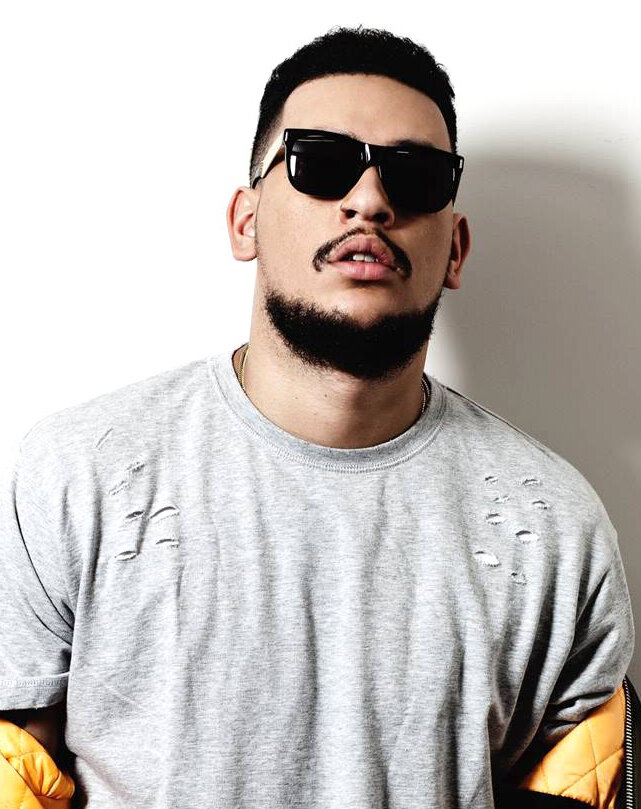
Last weekend, South African rapper AKA brought his Supa Mega Show concert to Cape Town, his city of birth. On the bill were his allies Kwesta, Da L.e.s, JR and Yanga. AKA kicked the weekend takeover with a pop-up shop of Supa Mega Show merchandise on Thursday and a meet-and-greet on Friday.
Lost Property shop, Cape Town, Friday 16 September
Two young women are having a conversation with AKA at Lost Property, a sneaker shop in Cape Town, where the rapper’s pop-up shop is held. They are telling him they flew all the way from Joburg for the show happening the following day. AKA is flattered. However there’s a small problem. “But I told you guys on Instagram: I said, ‘Guys, it’s going down.’” he retorts when they tell him they don’t have tickets, and the show is now sold out.
T-shirts and sweaters hang on racks in the small shop, where only about four people are allowed in at a time. His crew is in there, so it’s busy and crammed. “Let me sell you guys some clothes,” the rapper says to a group that has just walked in. He goes through the racks, taking the fans through the merchandise. There’s a pink long sleeve sweater with a line from his song “Dreamwork”: “Dollar sign got me in a good mood”. There are black and white Ts and sweaters with a low-light image of AKA on stage, facing up, arms open wide.
[button url=https://www.facebook.com/media/set/?set=a.967985869990777.1073741891.365580730231297&type=1&l=7173b6dc21target=blank icon=users]View More Images on our Facebook Page[/button]
AKA is a down-to-earth sweetheart today, far from the asshole everyone thinks he is, because of his relentless Twitter persona. He makes conversation with and thanks and hugs everyone who buys something as he signs their shopping bags. While I was in the queue earlier, a group of girls asked me if AKA is in the shop, to which I said yes. One of them couldn’t contain herself; she screamed and jumped up and down, her face gleaming with excitement. The queue is long; fans have come out in numbers.
Shimmy Beach Club, Saturday 17 September
I’m late for the show – I’ve missed performances by Kwesta, JR, Yanga and Da L.e.s, and it’s all good. I’m only here for AKA, and I walk in a few minutes after he takes to the stage. He is Him and the crowd are performing “Composure” as I walk in. it’s the savagery that follows that cracks me up. When he gets to that “I’m the reason everyone had ‘The Saga’ on repeat/ Now you wanna go and charge me 80 000 for a beat,” line he repeats it over and over, and his band transitions to “The Saga”.
The energy is insane. The trendy cool kids in the crowd are rapping and singing along to every word of the rapper’s array of hits. The beach sand outside Shimmy, where the stage is, is not allowing me to be great as it finds a new home in my Chucks. I catch a few elbows as I make my way to the front row to film and take pictures – my efforts don’t yield the result. No one is willing to retreat from the front row. It’s a difficult event to document, but I persevere.
Da L.e.s, Yanga and JR come in and out to join Supa Mega on stage for songs they are featured in. One thing I don’t like is that AKA’s mic is on autotune throughout his set. So even when he speaks or raps, it sounds like he’s singing. But the band, though, is the meaning of life. Master A Flat’s face contorts as he strums keys on the corner. DJ Fanatic is on the wheels of steel, and doubles as the hypeman. There’s a drummer and an electric guitarist. So, when you are told the Supa Mega Show is a production, believe it.
The sound quality could have been better, but AKA is bringing it, with a never waning energy.
I catch the Holy Ghost when he performs “I Want It All”, one of my favourite AKA songs, a song which he said he was performing for his day-one fans. Not many of them here, judging from the response.
Bottom line: AKA is still one of the best hip-hop performers in South Africa, I’m just really not sure about the autotune..
AHHB R&D | Producing Your Own Music Video Part 3
Words By TNGlive
In part 1 we discussed your role as producer in the preproduction stage. In part 2 we looked at the challenges you’re likely to face during the production stage of your music video.
In part 3 we’re highlighting things you’ll need to know about the post production stage, that’ll make you a producer delivering a product that is the best value for your investment.
Back Up
A golden rule to respect, is to make sure your footage exists on at least 3 different hard drives, preferably all from different manufactures. If anything happens to the footage, for example a hard drive may become corrupted, misplaced, stolen, or even accidentally formatted by a third party, it’s in your interest as producer to make sure you have all the raw footage on a drive that remains in your possession throughout the whole process.
It’s also important to be aware that when you’re dealing with camera footage, it’s in your interest to copy every single file as is, no re-naming or re-organising. This becomes important when using various software during the editing process because all the tiny sized files and folders that seem unnecessary, actually serve a vital process in allowing various programs to understand what type of footage it is, and how to read it properly.
Editing
Now that you have all your footage saved on a hard drive which you'll be keeping safe, you are now managing the editing process. If your director is not an editor, you’ll be supplying your chosen editor with one of the other drives that contains the raw footage. Don't forget the song file that has been mastered specifically for television broadcast.
What to expect: Ideally, once the editor has perused the footage, she should be making proxies that she’ll use to cut the music video.
Proxies are just lower resolution versions of the original raw footage that came straight out of the camera. For example, think of 4K ARRI MFX or ARRIRAW as some of the most high end raw visuals saved from your ARRI camera, much like your WAV file in a DAW. Proxies can be 720p HD or lower, much like an mp3 version of your WAV file. When it comes to computers these lower resolution versions, which by the way don’t affect the quality of the original files, make all the difference in regards to the smooth operating of the machine. Editing an enormous amount of footage in their RAW format just slows everything down.
Nowadays, editors can upgrade what they offer by acquiring some visual effects skills. Once your music video is cut to your director, and editor’s liking, she may proceed to add the desired visual effects to the music video. Notice here, as producer you’re not standing in the way of the creative job currently underway, you're merely ensuring progress is happening during the allocated scheduled time.
Colouring
Remember in part 2 we spoke about the cinematographer being part of the post production process? This is something often neglected in music video production, but well respected in the business of film and television that is being produced at the highest levels in the world. The cinematographer is essentially a student of the capturing of light which will later be presented as a series of images - maybe 24 frames per second. Whom then, is a more suitable collaborator for a professional colourist?
DaVinci Resolve is one of the industry standards when it comes to colouring. Finding a colourist who is experienced enough to give you high end results is major coup for your production. A good resource would be to dig into the credits of advertisements that have caught your eye. These credits could pop up on vimeo, or a brand’s official youtube page hosting the particular advert. Alternatively you could search for advertisement industry awards and comb through the list of winners, who could eventually lead you to the names you’re looking searching for.
The colourist, with her knowledge of how to extract all the colour information stored in your log footage precisely where it needs to be turned up or turned down, along with your cinematographer’s choices of lenses, what he was saying with his lighting, your editor’s visual language translation of the director’s vision, all combines to give you the finished physical product of your combined efforts.
In part 4 we will look at the various formats of your music video that you’ll want your editor to prepare for you as you conclude your job as producer, ready to distribute your music video.

AHHB R&D | Producing Your Own Music Video – Part 2
Words By TNGlive

In part 1 we discussed the preproduction process. We saw how scheduling and budgeting is central to your role as producer, as well as recruiting and securing the services of the team and cast that will help you execute your vision.
In part 2 we’re looking at what to expect during the production stage, as well as what you should be working towards as the producer to ensure you're getting the best possible value for your money.
The Director
Storyboard example.
What to expect: As producer, it is imperative that your director has a shot list or storyboard for the planned shoot day. In an ideal situation you would have ample experience behind you to be able to spot an over ambitious plan, allowing an opportunity to make immediate adjustments before the shoot day. If it’s your first time, you’ll be relying heavily on your hired director to be realistic about of how much can be executed on the day.
Goal: Your most important goal as producer is to make sure you ‘make your day.’ That is to say whatever is on the shot list or storyboard, will be successfully shot within the allocated time of your shoot day. Pick ups, the term used for previously unscheduled time to shoot what was supposed to have been shot, are a danger to budgets. Sometimes you have to be the one who keeps an eye on the importance of all the shots that need to be captured in order to have a cohesive product at the end, instead of just the one magnificent glory shot. So nudging the director to move on accordingly may be necessary from time to time.
Camera Crew
What to expect: Your Director of Photography, his camera and lighting team should be experienced with the equipment that they’ve selected. This is not the time for trying out new gear because it wastes time during the shoot, which ultimately comes out of your pocket. New gear experience is something they can personally arrange with a chosen gear house.
Goal: It’s best for you to familiarise yourself with various classifications of film lights, e.g. Red Heads, HMIs, KINO-Flos. Don’t stop there, also think about the type of music video you’re shooting, and research what type of camera within your budget would be best for the job. A good source is Philip Bloom, a renowned cinematographer who does extensive but easy to follow reviews of different camera technology. These steps could save you a fortune in executing works with high production value when you consider that your concern is the best picture at the best price, whereas camera crew are usually concerned with the latest and most expensive equipment the maximum budget can afford.
An Illustration.
If scheduling of your music video shoot leaves you with night shoots as your only choice, you could hire an ARRI Alexa because of its ability to film dark areas well, an HMI and red heads to light your set. Or alternatively you could hire a significantly cheaper Sony A7s, which is unmatched when it comes to low light performance; just look at Philip Bloom’s Now I See below for an illustration.
General Administration
What to expect: The buck stops with you. If anyone wants to know where the toilet is, you have to have an answer. Someone wants to know what time the set is breaking to have a meal, you have to know. Police arrive and they want a permit to show you have permission to shoot there, you must have it with you.
Goal:You must make sure everything else that has been booked for the day is available at the time you require it, before you require it, in order to allow yourself time to make necessary alternative plans should it be needed. This could mean access to a location, collection of props, etc.
You need to make sure all personnel are on schedule to be where they’re needed at the times they are needed.
Ultimately, your personally designed Call Sheet, derived from your scheduling, helps in communicating your expectations of everyone. This means making sure at least 24hrs before the day, your call sheet has been received by every crew member and cast.
What is a Call Sheet?
It contains all the information everyone needs to have for the day. This includes call times, addresses for the shoot, what is being shot, who is needed for each scene, what wardrobe needs to be prepared for whom by what time, closest emergency service incase of any accident on set, your contact number incase anyone needs to get in touch.
It’s A Warp, But Not Quite.
The end of the shoot day is almost the end of the shoot for everyone on set. After gear is returned and checked in the next morning, the DOP’s crew can also call it a wrap. At this point, it’s now you the producer, the director, the editor and ideally the cinematographer who will deal with post production. More on why follows in part 3.

AHHB R&D | Producing Your Own Music Video – Part 1
Words By TNGlive

When you have a clear idea about how you want your music to sound, and there is currently no comparison around, it’s likely you’re the best person to go about bringing that idea to life. So maybe you’ll learn whatever instrument, VST plugin, or push the audio editor of your choice to its limits in order to craft that new original sound exactly how you hear it in your head. You’ll probably put so much effort into this area, such as finding the right professionals to do the necessary specialised tasks of mixing and mastering, yet when it comes to the visuals to accompany your masterpiece, you’re likely to wholly outsource that task with a basic brief of what you want.
Hate it or love it, the heavily driven social media promotion of music projects has amplified the necessity for the visual presentation of your music to be on point. No one is going to care more than you to bring your visual idea to life, and so here we’ll look at how you can produce your own music video once you’re in a position where you would otherwise be hiring someone else to put it together for you.
“Owning a camera doesn’t make someone a director.”
If you’re developing with your comrades, and the polish of your music is as much a work in progress as the polish of their visuals, that’s a good strategy for the long run. Growing together is a great investment. However, if the levels of proficiency are at different stages, beware of paying for subpar services. The same way a beat maker is not necessarily a producer, it’s important to do away with the idea that just because someone owns a camera and knows how to record images automatically means he’s a director or cinematographer
You’re better off lending that camera to a professional cinematographer, or to someone who works as a camera crew professional in a supporting role for a cinematographer. The latter often has ambitions of one day becoming a cinematographer, and working on your music video is a professional opportunity to showcase their skills.
Typical Film Department Structure
(For your perusal to spot supporting roles for your master plan)
Preproduction.
Your very first step, is taking this clear vision you have in your head, and committing it to paper. There’s an official way to right a script, and a general guide is that one page is equal to one minute of screen time. If you download free scriptwriting software like Celtx, it’ll format it for you correctly. The important thing here though, is just writing down all the ideas that make up the music video you envision. You could alternative do this using index cards which you make by cutting up little rectangular pieces of paper and writing descriptions of each scene onto separate cards.
Script Breakdown.
Doing the above, sets you up with an efficient way of breaking down a thorough list of all the people and things you’ll need. It’s literally listing all the things you’ll be seeing in front of the camera, and the cast you’ll need in each scene.
Scheduling
Out of all the things you’ll need to worry about producing your music video, scheduling is going to be the make or break of your production. It’s not so much about dates on the calendar, but rather the number of days you’ll need for the things and people you’ve listed in your script breakdown. Consider the following example. Maybe you want a scene where police arrive at a location at the beginning of your music video, then by the end of the showdown that has happened throughout the music video, they arrest some characters. Maybe you also want a drone shot of your city at sunrise and a drone shot at night to close the video.
Your basic schedule could look like this
Thanks to your script break down, you’ll already have every detail of things you’ll need from big items like a location to minor things like hand cuffs. Your scheduling process is to then break down how much time you’ll need with each item and person (model, actor, friend). Time is going to be money, and the idea with scheduling is to maximise your time wisely. For instance, in our example we have 2 cops and 2 characters scheduled for 2 days. But thanks to scheduling, you can spot that perhaps you shoot the opening and closing on the first day, you’ll only need 4 cast members for the one day. This means you’ll only need the two characters (non-police) on the second day. Even if friends are going to be working for free, the least you can do is feed them, and so now you’ve reduced catering costs for day two.
Budgeting
Your schedule will dictate your budget. At this point, you’ll have to research the costs of everything. How much is it going to cost to hire an interested professional assistant camera person to be your cinematographer? How much is it going to cost to hire a director if you don’t want to wear this hat and instead want someone to collaborate with on the creative side? How much is a cop car? Google is your friend here. Search for local film crew agents, and some would have their rate cards available on their website. Alternatively, investing in a directory produced specifically for the film industry, for example The Whole Lot, is a great way of accessing contact details for almost any relevant service you can think of for your production.
Your basic budget could look like this:
We’ve looked at the bigger picture that you’ll deal with as producer of your own music video. In parts 2, 3, & 4, we’ll look at details you’ll need for basic knowledge of each department because ultimately, the buck will literally stop with you. You’re better prepared knowing the difference between luxuries and necessities while still in preproduction, to limit nasty nasty surprise costs as much as possible during the latter stages of production and post production.

Reggie Nkabinde Of Mabala Held A Press Conference But We Still Have More Questions Than Answers
by Phil Chard

After the serious allegations mounted against them by Julius Malema on Friday afternoon, Mabala Noise owner and ANC Youth League Treasurer General, Reginald Nkabinde decided to get out ahead of the scandal and convene a press conference of his own where he addressed a number of issues regarding the allegations laid against him and his company.
In response to how Mabala Noise is funding it operations and the allegations of an illegal relationship between the government , the ANC and the record label, Mr Nkabinde has this to say
“Mabala Noise is not doing business with any government.You are all welcome to go to the departmewnt of water affairs and seek a report about Malabla Noise. Malaba noIse is not doing any tender[s]”
In response to where the Mabala Noise gets its money, Mr. Nkabinde was defiant and openly declared that he has never received any funds directly from the ANC to fund Mabala Noise . He openly expressed that he was a businessman and he used the proceeds from his other businesses to fund Mabala’s operations.
“Mabala is an independent black owned company. It is not getting funding from anywhere else [besides Mr. Nkabinde himself]”
Major League G-42
Riky Rick at Major League Gardens
When asked about the potential conflict of interest that could occur if Mabala artists are booked to perform at ANC Youth League events (an organisation where Mr Nkabinde is the Treasurer General) he expressed that he was in business and running Mabala Noise long before he was elected into current position as the Treasurer General , yet he failed to actually answer the question. Whether he has been running the company for 5 weeks or 5 years the fact that he holds an active position within the company will present a massive conflict of interest if the man responsible for overseeing ANC Youth League funds is paying artists that work for his company.
In response to the insinuations made by Mr Malema about Mr Nkabinde's relationship with Minister Nomvula Mokonyane, Mr Nkabinde described it as as a mother and son relationship.
However when asked asked to address one of the biggest questions we have all had about Mabala Noise, a question I have had from long before Malema's accusations - about what Mabala Noise is offering these artists, Mr Nkabinde once again failed to provide to concise answer. He also kept referring to Riky Rick as Riky Riky which I found very amusing.
“Riky Rick[y] it's a public knowledge that he charges R65,000.[per performance] . There’s never been a weekend where Riky is not working . Just in a weekend Riky Rick[y] maybe he has 2,3 shows. When you calculate that in a month, it tells you that Riky Rick[y] as an individual, as an artist he is able to make R500,000 to R600,000 . And that on its own suggests that Riky Rick[y] can live a comfortable life as artist so why go and sell yourself for 5 million when you can live to live comfortably and he has been an independent .”
Major League G-15So let's use the figures provided by Mr Nkabinde and use some rough calculations and estimations. Please note these are not based off any actually figures. If Riky is doing 2 shows a weekend at R65,000 that comes to R520,000 a month in gross revenue. Riky doesn’t have a band , so let's assume that his tour DJ is taking 20% and a manager/ booking agent taking another 20%. That estimation leaves Riky with R312,000 a month. Which is R3,744,000 a year. That's a pretty decent living wage. So the question remains Mr Nkabinde. By your own admission, Riky was earning upward of R3.7 million a year (we have not factored in brand endorsements), so why would he sign onto your label for anything less that what he was already earning? Even if you subsidise the costs of music and video production. Why would he sign onto a label when he was doing pretty well for himself as an independent ? (those are also your words)That R5,000,000 figure does not seem so far fetched now that you have given us a glimpse into Riky’s earning potential. (Sidebar; get your paper Riky)
This press conference seems to have left more room for new questions rather than addressing the ones raised on Friday. I am still wondering about the conflict of interest if Mabala artists are booked for ANC gigs . I am still wondering how lucrative these contracts are and what their details are; does Mabala own all the publishing rights? Is it a 360 degree deal? Do artists have signing bonuses and album budgets?
Juju The Magnificent
While we ask these questions we should not let Mr Malema distract us from the fact that this whole incident might have been inspired by sour grapes. Besides what you may think of him or how the media paints him, Mr Malema is a very intelligent man who has used smoke and mirrors on a number of occasions to twist the narrative in his favour. Throughout his conversation on Friday Mr Malema continued to reiterate that his small upstart of a political party could not keep pace financially with the ANC and their main opposition the DA. According to Mr Malema the ANC spent R1 Billion where the DA spent R350,000,000 and the EFF pledged to spend no more than R10,000,000 on their campaign budgets. We should also not forget that artist like Cassper Nyovest, Riky Rick and Major League seemed to have aligned themselves with the EFF as well performing at EFF events.
We Used To Be EFFriends - Curated tweets by PhilChard
Now every artist has the right to be compensated for their work and they are free to perform at events organised by any political party , even if that means performing at a party they may not necessarily support. But in all honesty, South Africa might be free a country but it is not THAT free. Just ask iFani about the fallout after he accepted a DA cheque. We also have the tweet spectacle AKA made on about Cassper , Riky Rick and Major League returning to ANC from the EFF. The timing of their return, just before the elections and just after signing their deals at Mabala is more than curious. (as far as we know Cassper is still independent and has he has no affiliation with Mabala) .
There is clearly more to the Mabala story that meets the eye , whether or not all these questions will be answered remains to be seen. At the very least I hope this results in an incredible record label versus political party musical beef that is on levels we have never seen before.
Riky just dropped his new FAIRFAX freestyle where he declares “when you see me going up you wanna see me going down, every time I need you , you never come around “ . Considering the fact that the video dropped just 4 days after Julius’ statement sit is high likely that this song was recorded before the allegations. But we can always speculate can’t we ?

AHHB R&D | About ISRC Codes
Words By TNGlive

If you’re an independent artist, independent label head or going to be operating your own music publishing company in the spirit of banking the cents because it makes sense, the International Standard Recording Code is something you’re going to have to familiarise yourself with, if you’re not up on it already.
The ISRC is a unique code assigned to each individual sound recording or music video (podcasts can carry ISRCs too), preferably when you make the master copy of your song or music video. It’s a unique code that works with any digital format, that’s why it’s the industry standard when it comes to identifying and tracking the streaming or sales of your sound recordings worldwide.
What it Looks Like
The ISRC is a 12 digit alpha numeric code.
The country code is something you should never change regardless of where in the world you release your music or music video.
The Registrant Code is another element that should never be change.
Based on the combination of Year Of Reference and Designation Code, you shouldn’t run out of codes to generate in any given year, unless you’re releasing a total of 100 000 songs and music videos per annum - which would be both impressive and concerning if your name is not poppin’ yet because of it.
The ISRC is not something you entirely generate out of thin air. In order to be able to assign ISRC codes you’ll have to apply for that 3 alpha numeric Registrant Code. It’s just one of the components of the code that helps in identifying You as the owner of any specific ISRC code.
There are so many hustles around that ask you to pay a fee every time you need a new code generated, or asking you to pay an annual fee to ‘maintain’ your registrant code. Some agencies even claim that you must first become a member of the agency in order to secure a Registrant Code.
The International Federation of the Phonographic Industry (IFPI) clearly states that you do not have to be part of any music industry organisation for you to be eligible for a Registrant Code.
You can apply for a Registrant Code through an official ISRC Agency in your country. Click here for a list of Agencies and their respective contact details.
Alternatively, if there is no National ISRC Agency in your country, click here to apply through the International ISRC Agency.

The Pitfalls Of Rappers Marketing On Twitter
by Mayuyuka

After Silas' exploration of rappers creating their own platforms and TNG's informative pieces on how to be a successful rapper from the ground up. I penned this piece as a fleshed-out rant regarding the risks associated with using a hackneyed approach when methods that's were once unique are employed by up-and-coming rappers. We've explored the sheer power of branding in building a following before, so this is not a "how-to"; it's an "are-you-sure-you've-thought-that-through"?
Guerilla marketing is a really creative way to reach new customers. It involves utilising unconventional ways of attracting the public's attention and offering the audience a unique experience along with that of the product or service. Without getting technical, let's consider an artist a brand and their music a product that entertains. Enticing fans through airtime bundles, cash prizes, meet and greets or the sheer quality of your previous work as an artist are always viable options to get your name trending on social media. There are plenty of organic ways to go viral and generate interest in what you're offering.
Word of mouth still remains a very key aspect of extending an artist's reach. Only now, the power of the mouth is augmented by social media outlets like Facebook, Whatsapp and Twitter. Force-feeding the twitter streets seems to be a really popular go-to nowadays and can come off as a little crass... especially if it's not part of a more nuanced marketing strategy employed by a rapper.
Promo twitter seems to be largely effective, if the right influencers are punting your song (and they should get their proper dues for doing so please). A Twitter dependent marketing strategy is hard to gauge in terms of success though, because the music is usually offered for free. So unless you as an artist push the audience to your paying platforms and bank the cents... a successful campaign is relatively hard to measure.
A rapper thus has to cede a lot of their destiny into the hands of their promoters, who will try and influence their respective audiences to follow the rapper and download their song. It thus becomes a numbers game... solely about increasing reach. But what happens when these influencers lose the audience's trust? What happens if promotion on twitter becomes the sole reserve of all those who couldn't trend organically? What happens if your brand is inadvertently associated with undesirable 'partners'?. These are mostly rhetorical question to consider, with the general answer being: have a Plan B. The area of who an artist is associated with on Twitter is murky. From getting hacked, to fan accounts being able to peddle information despite not being official mouthpieces, then fans poking and prodding other artists in search of their next serving of beef... an artist's name can get dragged through the most with or without their knowledge. In light of this; the next question to consider is whether this form of promotion is sustainable for your particular brand.
Your possible fans might feel the need to download your work out of curiosity, or a sense of FOMO but... it has to be backed up by you delivering on your promise. My belief in my trusted influencers doesn't reduce the need for a quality product from an artist they're representing. I trust them... not necessarily the artist yet. The ultimate moment of truth is when your prospective fans first listen to your song after reading how it's “a banger, a smash, lit" AND being inundated by fire flame emojis on their TL. If the music doesn't add up to any of these adjectives... you could've possibly lost a potential fan. And... congratulations you've played yourself (Dj Khaled Voice)!
Although most rappers feel as though having haters is a sign of progress: there is now sufficient research that suggests that even non-talented or unsuccessful people have haters too. - Source: The Free Mixtape Center For Struggle Rappers 2015 Annual Report
It simply isn't a barometer for how well you're coming along.The power of these haters though, is that if they feel duped, they will remember your brand as one that over-promised and under-delivered. They will remember forever, and they will share this insight. And if Twitter has shown us anything... it's easier to trend when your ' haters' unite against you. That is why it is essential that the product match the amount of effort made to push it. The music has to be good, even better than before Twitter; because next week I'll be fanboying over a new track my favourite influencer is pushing. The fact is Promo Twitter is a nifty tool worth exploiting, and with the percentages of unemployed youth across the continent it provides artists, listeners and promoters tangible benefits... honestly anything that alleviates the youth's struggle is a bonus.
Just one thing though... as a rapper consider whether your product is worth the love it will inevitably get online through these campaigns. Is it good enough to be remembered when next week's track floats down our TLs? And also remember: the online hype is half the job; you still have to convert the new curious ears into active supporters of your artistry. And pay your promoters please!

AHHB R&D | Trademark Your Name
Words By TNGlive

One of the most personal but important decisions an artist or performer makes is settling on a stage name.
There is no rule saying you cannot use your government name, and likewise there is no rule stating that you’d be absolved from getting into potentially sticky situations with your government name.
In this information age, it goes without saying that one of the first things to do is a quick internet search to see if your chosen name is used elsewhere by someone in a similar field. What also usually goes un-said is when results show no one else is using the name you’ve constructed, it does not automatically mean it’ll remain yours to own at any given time going forward.
“Trademarking your name is as essential for you as having some kind of ownership of rights to your music.”
Here’s a hypothetical situation. Say you’ve been doing well with your grind, and now there is a deal on the table that will propel you to new heights. If it hasn’t been said, let it be said, there is no such thing as a universally standard contract. There are however things you can look out for, and one of those is ownership of your stage name.
Maybe you sign anyway, ignoring this clause, and later you’re not happy and you want out of the deal. You may be granted permission to exit the deal, but terms and conditions will apply. If the company owns your name, your name remains with the company. Now you can’t release new music using that name, and that is just the beginning of all the things you can no longer do, as you. Imagine that. How many times have you ever wondered what happened to so and so, they were so talented?
So if you don’t want to find yourself in a situation where you have to start over again with your brand identity, after building a fanbase that has come to know you by some other name, then hustle hard to trademark your name as soon as possible.
A good place to start is to search here to find out if your proposed name has been already trademarked by another entity or person in the world’s biggest single market for entertainment. Next you’ll want to do a local search to see if your proposed name hasn't already been trademarked in your country.
Get a Trademark Lawyer
The above should show you that it's not exactly a quick step to the finish line. A trademark can be country specific, or for specified regions in the world where you have filed applications, or worldwide. If you manage to tackle it on your own in your country of residence, then begin trying to register your trademark in other parts of the world, it morphs into a complicated journey. When you have different countries with different laws, the best course of action might be acquiring the services of a lawyer who specialises in trademark law.
Google is your friend, but if you want to go a step further and make sure you’re getting legit services, consult your local lawyers association or a similar organisation that promotes intellectual property law. An example from South Africa is theInstitute of Intellectual Property Law where you can get a list of lawyers who specialise in trademark law. It’s no question this route may be a costly exercise. It's much like purchasing record producing hardware and software, and paying for a mastering engineer's services, this too is a crucial investment to make, funds willing.
Do It Yourself
If you’re going to do it yourself, a useful route to take would be the Madrid Protocol, which will allow you to pay one fee and get trademark protection in approximately 97 countries.
Go here to see a schedule of fees you’ll have to budget for. However, before you can proceed, you will still need to have filed an application for local trademark somewhere in the world, preferably your current country of residence. It's through this first application, that your international trademark application can be forwarded to the World Intellectual Property Organisation for examination.
Go here for a flow chart of their process, and further information on how to proceed with filing and managing your trademark registration.

Banking the Cents makes Sense
by TNGlive

Are you aware that people who want your music for free, are not necessarily the only people who want your music? If you don’t care about this, who’s the one really playing themselves?
The narrative that people in Africa do not have access to online transaction facilities, has been the backbone supporting the reason why some rappers release music for free, at least when one is starting out and trying to build a fanbase.
What happens when the music you first release is so good, you have made an instant fan? It’s logical that if this new fan wants to take things further, she’ll seek out more of your music and may be willing to part with her cash as a way of saying, ‘thank you and I believe in you.’
In a world in which we’re fast progressing towards, or arguably already living in, this process needs to be as frictionless as possible because, we all have stuff to do. You either really have to have nothing to do, or be a full time curator to go chasing through pages and pages on the internet to find more of a new rapper’s music. Alternatively one could weed through a list of songs on a poorly designed free platform to try figure out which music belongs to which body of work, all in order to listen to it in the way it was supposed to be experienced. Trust, the average consumer does not have the patience for all these steps.
There are services that are maturing in making this next step even less painful for the consumer.
Streaming services are providing a platform which your new, willing and able to pay fan is already acquainted with navigating around, allowing her to easily find more of your music.
You the rapper, get’s a central platform that is presenting your work the way you intended it to be experienced. Your new fan can play your music to her heart’s content, and so further strengthening your new relationship. You the rapper, receives royalties for the number of times your music is streamed.
One could argue that as a new artist you may only succeed in generating enough airplay to only earn cents. Well, if you simultaneously release your music to streaming services for those that want to pay, and ‘leak’ to your usual channels for reaching your ‘fans’ who want it for free, then what are you losing?
A handful of cents will always be worth more than a handful of nothing. If you need to ask why, think about it this way. There is a proposal underway to increase payments to USD 0.09 per 100 plays. So hypothetically, if your new fans collective play all your songs 100 000 times, that 9 cents becomes USD90. That's USD90 better than the 100 000 free downloads that generated a handful of nothing. In the bigger scheme of things, you'll be prepared for the unpredictable runaway viral hit that'll generate USD900 for every 1 million streams. Wait. What?
These numbers do not include actual individual song sales that may happen. And the opportunity to license your music to a third party who discovers it on the playlists some these platforms create.

Will You Put Me On? A Guide for Artists Looking For a Platform
by Phil Chard

This is a guest post by Silas Beats
Sometime back, I got asked why I hadn't built a platform that would help upcoming artists to be "put on" as it were. I told the guy that asked that there were platforms he was already using, but wasn’t taking full advantage of. A lot of musicians that I come across are of the opinion that there are gatekeepers that they need to suck up to or impress in order to get to the top. This is the story that upcoming artists have been fed for ages. They get told that if they make the correct connections and get placed on the correct platforms that they will blow up. Musicians then seek out record labels and managers to find the platforms that will bring them success. There are other ways.
People tend to tell you that you’ll get similar results to everyone else’s, but only if you take what they say as law. For instance, that if you're looking for a label to release your music, you have less of a chance of scoring it big regardless of how much you believe in your craft. Sometimes it pays to go against the grain.
Colour-social-media-icons-squareImagine you owned various platforms on which to express yourself. You could post a picture of your cat on one or a video of your music-making process on another. With time and effort, you'd get a sizeable audience to interact with across these platforms. Wouldn't this be ideal? Owning your own platform/s has so many benefits that it would be silly of you to overlook this method totally.
To build a following on these platforms, get on-line and grind for 4 hours every day. Spend an hour making videos on your phone and taking pictures and then start posting and commenting. Spend time on Instagram, Twitter, Facebook and YouTube trying to build a community by posting and interacting with other people's content on a deeper level. Talk to people with similar interests. Make an effort to reach out to new people every day. You don't need huge numbers of views to start off with. You're most probably going to get 10 to 20 views on your videos and 1 or 2 likes on your pictures. When you do written posts you may not even get a single interaction. This is how things start, but they won't remain this way forever. You need to reach out to people daily. It's a tireless job that can leave you (very) frustrated at times. The rejection you'll get will be disheartening and you'll want to quit, but should you persevere long enough with building up these online interactions, you'll start to notice something...
Do’s And Dont’s
Do not spend hours tagging your friends on social media. You'll be left frustrated and you won't want to continue past the first week because you won't get the interactions that will build your platform. A technique I believe musicians should adopt is jump on any social media platform and search hash tags related to their industry eg. #rapmusic #studiolife #musicproduction and comment on the content that pops up. Get stuck in for 30 minutes to an hour and just comment on everything that relates to remotely. Say something about the speakers or the program the person is using to record. Comment on the fishbowl in the background or on the artist's cap or hoody. A few days of this should do the trick to start seeing any sort of results. When people react positively hit them up via private message or get their e-mail address and start the conversation. Repeat.
If you're a musician and you're in need of a platform to showcase your talent and hard work, why not try build your own via social media and let your profile or account become the platform. Let me know what you come up with and whether you gain any new insight by following these steps. I'd love to know what results you get.
Silas Beats is a blogger and music producer. You can follow him here

Rappers Stop Telling People We Aren’t Offended by The N Word
by Phil Chard
The way societies view celebrity has always been an enigma to me. An artist will become famous because they are a talented musician; they will be loved and lauded because of those talents. But for some reason, we expect these people to be infallible and all-knowing on the issues that matter to us when, in reality, most celebrities are just humans. Humans with an incredible talent. It's why, as the famous Dave Chappelle joke goes, news outlets ran to interview Ja Rule to get his opinion after the 9/11 attacks.
News outlets rush to call celebrities after a tragedy for the same reasons we follow their every move on Twitter, Facebook and Snapchat. Iit because an artist's opinion holds more value than anyone else's because of the influence and following they yield. We're more likely to trust their opinion because they are famous. We'll align ourselves to the politics of our favourite singer simply because their music has touched us in some way. Brands seek for endorsement from celebrities off of this principle of blind trust.
When one of our celebrities on the African continent is granted an interview on a non-African platform, they not only represent themselves, they represent their home nation and Africa as whole (because Africa is a country and what not).
I was perturbed when two of South Africa's biggest rappers were granted interviews on Sway in the morning which broadcasts from America to the millions of listeners of Sirius XM's network (not to mention Sway's 1 million YouTube subscribers). On both occasions the rappers went onto the show and declared that nigga isn't considered a racial epithet in South Africa. They did this while also misrepresenting the origins of kaffir.
When asked about the N-word, Cassper said:
"For us it's like guy. It's just means 'man'.It's never had that racial connotation...We don't get offended when white people say 'nigga to us. For us it's kaffir.....that is like our nigga,....that's what would aggravate or agitate us, that's what they use to call black people, kaffir which means monkey."
Cassper was possibly conflating kaffir with Bobbejaan
AKA was on Sway’s show and got asked about the word’s meaning. His response?
"Well, for us basically if you're a person of colour, you see me, I'm a coloured person and in America that means something totally different.....when we say [nigga], that is something we learned from rap music....even on our commercial radio stations they don't edit the word nigga..... It has no legacy it has no offense to it"
Here is the video of Cassper saying he doesn't get offended when white people call him the N word pic.twitter.com/90P91s7eBx
— Phlynt Phlossy™ (@PhilChard) June 24, 2016
When Sway then asked about the K-word, AKA responded: "You see I don't even wanna say it." He went on to attribute the origins of the K-word, saying that it is some substitute for a monkey.
Firstly, the word Kaffir is derived from the Arabic term Kafara or Kãfir which mean "outsider" or "non believer". It is believed that Arab nomads would refer to the black populace of Southern Africa as Kaffir because they were not practising Muslims and were not of their culture. Around the 18th century white settlers pitched up on our shores and since they couldn't think up their own slurs they appropriated the term used by the Muslim Arabs and shifted it from a simple adjective into an incredibly painful slur used to dehumanise and oppress our ancestors.
The storied origins of the K- and N-words follow parallel paths. It is is widely believed that the word nigger was a derived from the negro or niger (Latin word for black); or nigré (a French pejorative term). Once again, the descriptor was twisted into a painfully biased and powerful term that was used to justify the abhorrent treatment of a people for over 400 years. Both words are extremely powerful and elicit strong emotions, especially amongst those who have had those words used against them.
AKA's refusal to even mention the word is a sign of that.
Today, the words carry different meanings in the respective societies in which they are used.
In America a group of black people attempted to reclaim the word and used it as a term of endearment. I discovered Hip Hop as an adolescent. I heard all of my favourite artists use it freely. I, too, rationalised that we had indeed reclaimed the word and it no longer held power. I recoil when I think back to a time when I would allow white friends to use the word around me as well.
As an adult, I know better.
A few years ago Trevor Noah tried to do the same with the K-word in his special That's Racist. He tried to reclaim it in the hopes of removing the word's power. He argued that to remove the word’s power we should start using the K-word positively, in a similar way to how black America reclaimed the N-Word. Thankfully those efforts failed and were frankly painful to watch . The reasons behind why the N-word is such a divisive word in America and why it is still so powerful and loaded in South Africa require more in-depth discussion. I encourage you to read this and this.
The N-word gaining popularity amongst Africans via Hip Hop culture, and it being seen as a term of endearment, does not erase the pain linked to it. That much is clear when observing how black people in America struggle to find the word's place in their society and how offensive it still is when a non-black person uses it.
Cassper said that we don’t get offended when white people use nigga on us. It’s important to separate Cassper's own feelings about the word from the feelings of people at large. If Cassper has absolutely no issue with being called a nigga by a white person, then that is his personal choice. However, I know a number of South Africans and people in Southern Africa (where the K word was widely used by white oppressors) who would be extremely offended if a white person used that word.
[pullquote align=right]
By framing their answers in the way they did, Cassper and AKA have made it seem like we appropriate the parts of American Hip Hop culture that we like while completely ignoring the significance and history of words like nigga and the pain associated with them
[/pullquote]
What both artists failed to articulate is that words mean things, and that the context in which words are used is very important. As we've seen, these two words were derived from adjectives and twisted into something more sinister. In isolation, the words have no power. But when they are loaded with the hate and oppression that coupled their use, the words acquire a new meaning, in much the same way that an innocent word, when used in a racist context, takes on a new meaning.
Let's look at the word monkey, for example. When I was a precocious and adventurous child my sister and I would often climb the trees in our yard. It was great fun but it also resulted in a few scrapes, falls and bone breakages. My mother would call me a monkey. I know for a fact now that my mother's use of the word was not rooted in hate. Just the other day, AKA himself referred to his beautiful daughter as a monkey. No logical human would dare assume ill-intent.
It's this monkey's bday tomorrow 💜😂 pic.twitter.com/pcwF67lrnj
— AKA (@akaworldwide) July 7, 2016
SparrowWhen Penny Sparrow, a white woman, used the word monkey to describe black people on the beach front, we automatically knew the context and intent of her usage of that word.
If a friend of mine were to call me a nigga, I would understand the context. Are AKA and Cassper saying that they wouldn’t be offended by a white person referring to them as niggas?
Are they saying that even if they were called a nigga by white person in America they would fail to recognise its significance?
The N-word may not have any real cultural legacy in this part of the world, but the Africans that live here understand fully the context behind the word. By framing their answers in the way they did, Cassper and AKA have made it seem like we appropriate the parts of American Hip Hop culture that we like while completely ignoring the significance and history of words like nigga and the pain associated with them. Those frustrations were evident in some of the calls both rappers took from listeners while on Sway’s show.
In the same token, we as Africans need to interrogate why we even use such a word in the first place. Why do we want to carry the burden of using a word created by oppressors who look a lot like the people that oppress us, and who used a word to hurt people that look alot like us in the first place?

Something Special Happened At The Barclays Center
by Phil Chard

Something incredible happened last night in Brooklyn, New York. I truly feel that decades from now what I witnessed with the One Africa Music Festival will be described as a watershed moment in the global takeover that African pop music is about to embark on.
Though it was not the first all African Music event to be held in America (recently we had the All Access Ghana that was held in Washington DC and Sarkodie impressive Apollo Theatre concert) but this was different for a number of reasons. Firstly, according to reports tickets for the event sold so well that the organisers had to create extra seating to accommodate the demand. According to NotJustOk founder Ovie Ofugara who attended the event, he estimated that about 15,000 people were in attendance. From the images that I received from attendees and what I saw via the livestream provided by Tidal I wouldn't argue those numbers.
Estimated crowd attendance for #OneAfricaMusicFest currently set at 15,000. 13,000 tickets sold, 2,000 complimentary. Game-changer.
— Övie (@OvieO) July 23, 2016
The second impressive feat was this event was promoted without a major sponsor. Not one! As Banky W expressed when he called Paul Okoye (not the P Square guy, the CEO of Upfront & Personal Management and Consultancy). That was a brave and bold decision from Mr Okoye. Having facilitated a number of deals and endorsements on the behalf of several notable Nigerian celebrities and events, access to potential sponsors would not have been a difficult task for him.

The only major strategic partnership that the evet seemed to line up was their streaming partnership with Tidal which is how I was able to view the event. By streaming the concert the One Africa Music Festival became one of the first truly global event in African music. The combination of the artists involved performing in in America, coupled with their streaming partner is something completely new to the continent.
Despite its title, the line up for the “One Africa” concert was very Nigerian centred, featuring Wizkid, Tiwa Savage, Davido, Flavour, Seun Kuti, Don Jazzy, Timaya, Ayo Jay, Sound Sultan, and Praiz all from Nigeria. Stonebwoy and Efya from Ghana while Diamond Platnumz represented Tanzania. There were the Nigerian American artists Jidenna and Wale on the bill but Wale did not perform for unclear reasons. Essentially this was the Nigerians and friends concert.
The performances and coordination of the event were stellar, outside of a few sound issues that I picked up on the stream. However some of these issues went relatively unnoticed by the attendees that I spoke to who all attested to the incredible energy and atmosphere in the crowd.
The standout performers were Tiwa Savage who gave a masterful live set as she rolled through her hits looking incredibly ravishing and polished before closing out her set by throwing up the Roc to confirm her signing to Jay Z's Roc Nation. Wizkid who was the final act of the night displayed his incredible stage presence as he teased and entertained the crowd while engaging them in between songs. All this was achieved despite not having the support of his full band who could not make the event for unknown reasons. In a high energy moment Wizkid also brought out producer Swizz Beats before they ran through a medley of the Ruff Ryder beat maker’s hits. Throughout his performance Wizzy kept saying that he had too many hits and eventually that proved to be very true as he was forced to skip his last song of the night, ironically it was Final due to time constraints.
Seun Kuti delivered a powerful rendition of his father's 12 minute song Zombies assisted by the full Egypt 80 band. Diamond Platnumz delivered another impressive live set and showed the Barclays Center crowd why he is one of East Africa's most popular artists, all this despite the fact that his trousers kept falling. Jidenna showed off his Nigerian side in a way I have not seen before. Appearing on set with spirit masquerade costume that danced behind him he broke out into dance and impersonations of his father as he kept the crowd hyped, performing songs like Classic Man and his new song Chief Don't Run.
Timaya delivered a high energy set on his own before being joined by Soca star Machel Montano as they performed a number of high energy songs before announcing that a joint album was in the works.
Ultimately all the artists on the bill are some of the best performers in the continent so the quality of their sets remained high as Banky W who played the dual role of host and performer did a stellar job to keep the audience engaged. The only real disappoints were Davido who, despite having a solid repertoire of hit songs once again failed to translate that to the stage as he lip synced most of his set (again). Ayo Jay came out to perform his hit Your Number which was the only song in his performance yet somehow he ran out of breath a number of times.
In summation this was an incredible moment for African Music and the artists involved. Though it was heavily focused on Nigeria and its stars the successes of this night will reverberate across the continent as African stars continue their infiltration of American and European markets. The fact that this event occurred without sponsorship is a true sign of how far the demand for African Pop Music has grown in the diaspora. No longer a genre consumed solely by expatriates it is now reaching new audiences who are more than willing to pay to enjoy the culture. Mr Okoye who clearly has balls made of reinforced steel gambled on himself and the music and won in a big way. The success that was this night was not only limited to the attendees but everyone who streamed it live and saw first hand just how far African Music has gone. This left no doubts that African artists are now ready to expand beyond the continent and the world is ready to receive them.
We have spoken before of how labels are now scrambling to get into Africa, well it seems first world fans are also scrambling to consume the culture and we all saw it take place at the Barclays Centre last night.

Nasty C Just Dropped His Video FOr Switched Up: Here Are Our Thoughts
by Phil Chard
As South African Hip Hop continues its astronomical rise into the mainstream, a number of young, talented, and hungry artists have presented themselves as the next crop of youth culture ambassadors. One of those acts is the extremely talented Durban born Nasty C.
Boasting a string of recent radio hits like Juice Back (its remix included) and Hell Naw , Nasty has positioned himself as the lyrical alternative in the complex trap music zeitgeist permeating the current Hip Hop scene.
Where other new acts seemed to have struggled and bristled under the pressures of their new found fame and the scrutiny that comes with it, Nasty has always presented the persona of an artist born to be famous. His hushed and gentle voice, demure frame and boy band good looks are a marketers dream and his penchant for lacing together complex flows and wordplay that can translate into radio friendly hits have made him an unmistakable force in 2016.
With all that in his favour, Nasty C dropped Switched Up at the beginning of the month along with two other surprise releases. The song had Nasty switching effortlessly between a catchy hook and bridge while dropping multi syllabic verses with a stagnated flow.
Three weeks later Switched up now has a video but after viewing it a few times I have to ask the question, “Does Nasty C know that he his famous now?” The video is a drab and disappointing affair whose only real highlight is Nasty krumping in the middle of a quarry.
Well clearly he does, as he declared on his impressive verse on Anatii’s Jump “What you think they taking photos for? I am very important bitch. Please call all the curtains for me. They might be recording this”
Clearly the aspects of his new found fame are not lost on the artist but the question as to whether he fully understands the gravitas of the moment and his brand need to be asked.
Outside of the Sesan and Uprooted Media produced video for the Juice Back Remix , Nasty C has yet to produce a set visuals befitting his current trajectory. My sentiments were echoed by famed host Scoop when he spoke to Nasty C on his show Turn Up after Nasty C released his video for Hell Naw. Nasty is too famous and skilled to be releasing videos that don’t leave an indelible mark in the mind of fans living in an age of microwaveable news and content. Sentimental significance aside the video for Hell Naw, which has become a massive radio and online hit was a forgettable offering and sadly the video Switched Up looks like it will leave a similar imprint.
Scoop and I could very well be picking at the insignificant minutia, an incredible video won’t mean much if the artist can only deliver a constant stream of struggle bars. But of Nasty C is an incredible rapper, with a great deal of momentum and mainstream interest. If he is to truly make a memorable mark on the scene it has to be done though his music, performances AND his videos.
@Nasty_CSA

The Best West African Hip Hop That You Haven’t Heard Yet
by Mayuyuka

West African music is steadily spreading its wings and its influence can be traced in other regions of Africa as well as on a global scale. This is great for the continent and reveals how the world is finally waking up to the potential of our arts sector.
We usually focus on Nigeria and Ghana as the centers of cultural production in the region, and for good reason... with a string of acts breaking through over the years these two countries are stamping their place on the musical map. For a bit of a switch up though; we decided to list a few gems from other West African countries that deserve our attention. Here's a little taste of some of the artists who grabbed our ear:
Weei Soldat - Tignè Fogné
Weei Soldat is out of Mali and his track Tigne Fogne has a hint of trap to get us started. The cut is taken off the album Magnum Vol. 1.
Kossi - Ape' Son - Elahoba
Togolese artist Kossi Ape'Son is a traditional singer and this video pays homage to Senegalese culture. From the setting to the colourful fabrics, it's a great watch. The song Elahoba matches the visuals in this impressive track from the man who started under the tutelage of the renowned King Mensah.
Joey Soldat - Burkin Bâ
Joey Soldat of Burkina Faso released this track Burkin Ba that shares a name with his album a couple of years ago. This catchy song is a definite head nodder, don't snap your neck!
DenG - Put Foot
For a dabble in Koloqua music, Liberian DenG is the go to guy. His Killerbeatz-produced track Put Foot is a great companion to his previously released Lappa Fine. This is another infectious offering!
Liberian Hip Hop seems to be in a good place, so while we're on the topic let's have a peek at the Lib Hip Hop Cypher that happened at the recent Liberian Entertainment Awards:
Anny Kassy - Nimba
On to Guinea, the home of rapper Anny Kassy. The artist dropped a socially conscious offering with Nimba, aimed at promoting the upliftment of young girls through education. The amazing video is worthy of high praise too.
E.Ray - Ma Prière
Maintaining the theme of social awareness we have E.Ray, a renowned rapper from Benin. His song My Priere is a lyrical masterpiece that sees him exercise his civic duty by evaluating the political realities of Beninese society. The lyric video and simple melodies help you get the message with this one.
Akhlou Brick Paradise - Ara ak Dayza
Finally, we head to Senegal for a track with a great hook by rapper Akhlou Brick. His song Paradise features Dayza and the track is as clean as the visuals!
To wrap up here's another cypher, this time from the Galsen Hip Hop Awards showcasing some of the rap talent Senegal has:
As usual , you can let us know of any other artists we should check out in the comments section!

The New Scamble For Africa
In 2015, renowned audit behemoth: PwC, in one of its futuring exercises confirmed one of the suspicions of music industry practitioners by predicting that proceeds of entertainment and media will gross $8.5 billion US dollars in Nigeria by 2019, of which music is a major part.

Chris Brown is not a small fry in today’s musical reckoning, a highly successful, albeit controversial pop star known the world over. So when he chooses a Nigerian Afro-Pop act like Wizkid as his sidekick on his on-going World Tour, he may be falling in line with the new thinking in the industry.

Ice Prince & Jay Z. Image Courtesy of Ice Prince's Instagram
In 2015, renowned audit behemoth: PwC, in one of its futuring exercises confirmed one of the suspicions of music industry practitioners by predicting that proceeds of entertainment and media will gross $8.5 billion US dollars in Nigeria by 2019, of which music is a major part.
In Africa, Nigeria’s huge population makes it an easy ground for the sampling of different sorts and in most cases, if it sails there, it will have a high likelihood of flying elsewhere on a continent that is now grossed over 1 billion people. By implication, Africa’s next big commercial export will be calibrated in musical notes and we are witnessing the early days of a new scramble for these new artistic resources.
After winning a Grammy in the Best World Music Category earlier this year, Benenoise Angelique Kidjo said: "I want to dedicate this Grammy to all the traditional musicians in Africa, in my country, to all the young generation,”. Now based in New York, Kidjo has had a front-row seat to witness the growth and newfound love for African music in the first world. Late last year Kidjo also collaborated with Nigeria’s Omawunmi, signifying her willingness to collaborate with the rising tide of Africa’s new crop of artists.
The global music business has responded well to the beats from the black continent too with Sony expanding its operations across Africa particularly in the West and Roc Nation’s newfound interest in African acts being the biggest bellwethers of the new trend. As for the former, the business model for Africa has been evolving over the past five years. First, it was Sony Music Africa (an SPV to run their interest in Africa) that has engaged talents. But now, the parent brand Sony BMG has waded in with two offices in quick succession. Some of the artistes that have courted their interest included D’banj (Nigeria), Xtatic (Kenya), Davido (Nigeria), and Alikiba (Tanzania).
RocNation on the other hand still seems to be dipping their toes in the pool, with no deals being signed as yet but there is strong evidence to suggest that they are keenly interested in entering the African market. Jay Z has already had meetings with Ice Prince, Don Jazzy and Tiwa Savage. Last year he sent his cousin and business partner Briant Briggs and Jay Electronica on a talent scouting trip to Africa. South Africa’s Nasty_C has also claimed that the Roc has expressed interest in him and contacted him personally last month.
It’s a new age for African artists, especially for talents that have been able to fuse the right contemporary elements into their sounds. Even without the support of major labels or structured industry artists are now money-generating brands within their own rights. Nigerian Davido gawked on his Snapchat that his Pepsi deal was worth 100 million Naira (~$500,000 USD). Cassper Nyovest bragged that he grossed over 1 million Rand in show revenue last year and is rumoured to have signed a deal with MTN worth 7 figures.
Back to Chris Brown’s “One Hell of a Tour” in Amsterdam last weekend, he performed a yet to be released collaboration with the Nigerian titled “African Bad Girl”. From the title to the beat and stage act, it was obvious the world is ready to be entertained by everything the continent has to offer.
As acts like Wale, Swizz Beatz, and Drake have now shown, the tide is shifting. Gone are the days when African artists had to travel abroad with large sums of cash in hand hoping to convince international acts to collaborate with them. The world has begun to take notice and respect the talents of Africa, and they are now more willing to collaborate on mutually beneficial musical offerings.
The biggest challenge, however, is for the industry to be strong enough to trap down most of the proceeds for the benefit of the continent and the artists themselves.

Tipping The Skales: We Take A Look At Bad Recording Deals & Disgruntled Artists
by Mayuyuka
There have been great breakout successes for independent artists all across the world lately. In the States Chance The Rapper hasn't relied on any deals, and in South Africa Cassper Nyovest has built himself an empire with his record label Family Tree.
It's an investment the label makes in an artist, and like any other investment a healthy return is expected
For every great indie success, however, there's a lot more successful artists with label backing. Now what about those successes who we see hit the limelight but are signed to deals which seem aren't in their favour. Once in awhile, the curtain is pulled back and the façade of bottle popping and fresh whips gets put firmly in the spotlight. Well, Skales is a prime example of a major signing gone wrong it seems. Although since resolved; news of his and his managers arrest brought about a slew of documentation online.
The Nigerian allegedly signed a 200 Million Naira deal with the then Howie T and Dipo Abdul-helmed record label Baseline Music. Now if this is all factual, it intrigues me because the deal purportedly included a new car, a lifestyle allowance and a new house (legally, and not mistakenly referred to as property). Now I say that somewhat facetiously but the point of ownership is essential to talk about when we speak of record deals. Along with an artist receiving an advance to record music with the best facilities available to them, all these other perks are considered loans from the record label. It's an investment the label makes in an artist, and like any other investment a healthy return is expected. That means any advances offered to an artists have to be paid back through sales and a cocktail of other revenue streams. Before that debt is settled though... the label has access to any surety it can get. Surety is literally insurance on the prospect of future losses. Put simply, an artist's value is tied to the label for as long as they're contracted to them: until they recoup a return.
Now let us track back a little: A label willing to give an artist an extreme makeover (rapper edition) deluxe package isn't being charitable and is just putting as many eggs into a basket they believe in as they see fit. So it wasn't a surprise to hear that Skale's earnings were reportedly divided in a 70– 30 percentage split in favour of his label.(of course Skales has denied these rumoured percentages to be true, so let us assume that those are splits, or arguments sake.) This agreement applied to income from both his current and any previous deals apparently, meaning he sold off his previous and potential earnings to a corporation. What's most striking is the alleged 10 Million British Pound fee he'd have to pay to buy himself out of the contract.

I'd hazard a guess that the typical 360 Degree Deal is responsible for a lot of artist's unhappiness. In such a deal the label has access to an artist's image rights, copyright, performance fees, syndication fees, royalties, publishing rights and literally any other income the artist earns from. All signed away in exchange for the access and perks the label provides. As preposterous as that sounds, it is somewhat the norm. It sounds harsh on an artist, but when you have access to an allowance, studio facilities, distribution and other perks the price to retrieve your freedom is pretty high! In Nigeria alone there have been a range of artists leaving after being at loggerheads with their labels.
Here's a few of the verifiable accounts we have so far:
Milli just parted ways with Chocolate City apparently due to having his music unsupported by the label and a collaboration with Wizkid shelved. He goes so far as accusing label honcho M.I Abaga of stifling his career! We've seen contractual disputes between D'banj and Don Jazzy tear apart their partnership as well in eerily reminiscent fashion. Meanwhile, Ice Prince has moved on to form his own label, an imprint under Chocolate City, after announcing that his original deal with Choc City had expired two years ago.
What seems very unnatural is the relationship with Runtown and Eric Many Entertainment. His label allegedly breached their contract after failing to pay him his 35% split over a couple of years. He has a sordid tale to reveal which includes broken promises, extortion and death threats! The artist was banned from performing due to an injunction and subsequently terminated the agreement.
And now a run-down of other Nigerian acts who split from their labels, as per Pulse:
This sort of strife for artists isn't only isolated to Nigeria, as in South Africa there are plentiful stories with artists signed to labels such as Ghetto Ruff where popular musicians such as Ishmael and Zola have had varying disputes with label head Lance Stehr. The problem is clearly not limited to individuals either as the issues Zambian outfit Zone Fam have with Kenyan label Taurus Musik proves. Kenyan femcee Xtatic recently had an online outburst aimed at her label: she blames Sony Music Entertainment Africa for allegedly shelving her project even though she met her end of the deal. She goes on to list more East African talents she feels have been exploited in her exasperation, such as Ugandan rapper Keko.

It seems year after year we hear stories of beloved artists passing away broke and the like. And this is where stories like these take my mind. There are whispered tales of composers of indigenous music having their work owned by people with foreign names... and even artists' families inheriting their indebtedness! The vast amount of African legends, in any genre, that have been dealt hands they either were unaware of or misunderstood is extensive. Even if a label sounds like the underdog in relation to mainstream players... every label operates like a label: whether it is indie, an imprint or multi-national. In the relationship between artists and label the word partnership only counts in press releases and is rarely accurate. You are employed by a label to recoup its earnings, and in the meantime anything attached to you they own!
The tales of these artists converge to remind us that the music industry functions on a lot more than just talent, hype or the glitz and glamour us consumers literally buy into. Even talented artists require an understanding of what they seek to achieve. Sometimes being independent is the best way and other times a label provides much needed structure, distribution and reach. All this, however, should be negotiated. When signing to a label not every right needs to be cashed in! Without keeping some form of musical ownership... great strides such as the quotas in Nigeria or the newly enforced 90% local music on South African radio will all be in vain (like only play-listing songs from decades ago). With no publishing or royalties to their names, there'll be very few benefits for the talented folk who entertain us!
We've spoken about having a great team around you in a musical sense before. But an artists squad goals should include certified managers, publicists, accountants and more especially lawyers. We need people to turn up with, but we also need people to turn up... when we're signing on the dotted line!
“I see too many rappers, and not Enough CEOs”- Cassper Nyovest (Skelm)