

The New Scramble For Africa
by Phil Chard
Chris Brown is not a small fry in today’s musical reckoning, a highly successful, albeit controversial pop star known the world over. So when he chooses a Nigerian Afro Pop act like Wizkid as his sidekick on his on-going World Tour, he may be falling in line with the new thinking in the industry.
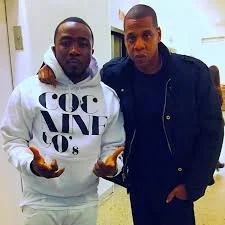
Ice Prince & Jay Z
In 2015, renowned audit behemoth: PwC, in one of its futuring exercises confirmed one of the suspicions of music industry practitioners by predicting that proceeds of entertainment and media will gross $8.5 billion US dollars in Nigeria by 2019, of which music is a major part.
In Africa, Nigeria’s huge population makes it an easy ground for sampling of different sorts and in most cases, if it sails there, it will have a high likelihood of flying elsewhere on a continent that is now grossed over 1 billion people. By implication, Africa’s next big commercial export will be calibrated in musical notes and we are witnessing the early days of a new scramble for these new artistic resources.
After winning a Grammy in the Best World Music Category earlier this year, Benenoise Angelique Kidjo said "I want to dedicate this Grammy to all the traditional musicians in Africa, in my country, to all the young generation,”. Now based in New York, Kidjo has had a front row seat to witness the growth and new found love for African music in the first world. Late last year Kidjo also collaborated with Nigeria’s Omawunmi, signifying her willingness to collaborate with the rising tide of Africa’s new crop of artists.

Jay Z, Tiwa Savage Don Jazzy
Global music business has responded well to the beats from the black continent too with Sony expanding its operations across Africa particularly in in the West and Roc Nation’s new found interest in African acts being the biggest bellwethers of the new trend. As for the former, the business model for Africa has been evolving over the past five years. First it was Sony Music Africa (an SPV to run their interest in Africa) that has engaged talents. But now, the parent brand Sony BMG has waded in with two offices in quick succession. Some of the artistes that have courted their interest included D’banj (Nigeria), Xtatic (Kenya), Davido (Nigeria), and Alikiba (Tanzania).
RocNation on the other hand still seems to be dipping their toes in the pool, with no deals being signed as yet but there is strong evidence to suggest that they are keenly interested in entering the African market. Jay Z has already had meetings with Ice Prince, Don Jazzy and Tiwa Savage. Last year he sent his cousin and business partner Briant Briggs and Jay Electronica on a talent scouting trip to Africa. South Africa’s Nasty_C has also claimed that the Roc has expressed interest in him and contacted him personally last month.
It’s a new age for African artists, especially for talents that have been able to fuse the right contemporary elements into their sounds. Even without the support of major labels or a structured industry artists are now money generating brands within their own rights. Nigerian Davido gawked on his snapchat that his Pepsi deal was worth 100 million Naira (~$500,000 USD). Cassper Nyovest bragged that he grossed over 1 million Rand in show revenue last year and is rumoured to have signed a deal with MTN worth 7 figures.
Back to Chris Brown’s “One Hell of a Tour” in Amsterdam last weekend, he performed a yet to be released collaboration with the Nigerian titled “African Bad Girl”. From the title to the beat and stage act, it was obvious the world is ready to be entertained by everything the continent has to offer.
@THEREALSWIZZZ vibing to @RealBlackCoffee | there are levels to this life thing yo pic.twitter.com/pBpjP1U9qJ
— Phlynt Phlossy™ (@PhilChard) April 22, 2016
As acts like Wale, Swizz Beatz, and Drake have now shown, the tide is shifting. Gone are the days when African artists had to travel abroad with large sums of cash in hand hoping to convince international acts to collaborate with them. The world has begun to take notice and respect the talents of Africa, and they are now more willing to collaborate on mutually beneficial musical offerings.
The biggest challenge however is for the industry to be strong enough to trap down most of the proceeds for the benefit of the continent and the artists themselves.

The AHHB Podcast Featuring Award Wins, SABCs, Ice Prince , Anathi And The SAMAs
by Phil Chard

AHHB Podcast V 2
After taking a week off due to unforeseen circumstances (the movers bundling my equipment with the “stuff I don’t really need” box) we are back with another episode of the AHHB Podcast.
This week we have another highly entertaining episode featuring music from Kiss Daniel, Gemini Major, Akan, Worlasi, Phyno, N’veigh, Blaklez, PDotO, Ras, V-Way, Rosah-Joy, AY, Diamond Platnumz, Emtee and more.
We also have interviews with Anathi and Ice Prince and discuss all the latest news from across the continent, including million dollar lawsuits, bad contracts, The SAMA awards and much more.
Don’t forget to follow on Twitter @africanhhb & @PhilChard.
PS: I apologise for the acoustics of the episode, I am still setting up the studio at the new place.
Americana - Aspiring by Kevin MacLeod is licensed under a Creative Commons Attribution licensed
Source | Artist

We Got Another Accolade At The African Blogger Awards, Here Is Our Soopy Thank You Speech
by Phil Chard

The African Blogger Awards were last week and after the judges deliberated, tallied the votes, did google searches and debated on who had the prettiest site ( we really don’t know what happens behind that curtain), it was decided that The African Hip Hop Blog is the second best music blog in Africa.
First and foremost we would like to thank the fans, the readers, the link sharers, the retweeters and the commenters. Without you, we would be blogging to an audience of 1. Thank you for trusting us to become a part of your culture. Secondly thank you to the artists, it might not seem like it when it takes us weeks to respond to you or when we constantly reject your music, but it is because of you that we have something to write about. We need you more than you need us and we thank you for entrusting us with your art.
Thank you to the team, who sacrifice countless hours, reading, researching, listening and writing for little reward. You guys are the real MVPs.
Here is a full press release detailing our achievement
The African Hip Hop Blog recognised at the 2016 African Blogger Awards
For the second year in a row year the African Hip Hop Blog has been honoured as one of the continent’s premier blogs at the African Blogger Awards
The African Blogger Awards, which are now in their third year aim to highlight the best blogs and social media influencers from around the continent. This year the awards received over 2,000 entries in 36 categories almost doubling the number of entries from the previous year. The awards gauge metrics such as audience size, blog relevance and how far the blog’s content resonates outsides its own community.
After vetting the 2,000 entries from across the continent, The African Hip Hop Blog was judged to be the second best music blog in Africa. This award comes after the African Hip Hop Blog scooped The Best Blog About Africa prize in 2015– the award’s most prestigious award.
The African Hip Hop Blog was founded in 2008 by Zimbabwean, Ross Hagan while he was a student at Rhodes University. Since then the blog has grown immensely and now has contributors from across the continent. The website is now run by Ross Hagan , Phil Chard (both Zimbabwean) and Twaambo Haamucenje who is a web designer based in Zambia.
“We are all very honoured that our efforts are being recognised and we continue to be rewarded. Thank you to the African Blogger Awards and most importantly our readers for helping us become who we are” said Chard.
“"Thanks to the readers and thanks to the artists. We do it for them.” Said Twaambo Haamucenje.

The SABC & 90% : Great For South Africa, Bad For Everyone Else
by Phil Chard

Earlier this week Vuzu sat down with Nigerian artist Ice Prince while he was in South Africa for a brief interview. During the chat, Dash asked what Ice Prince thought of the new 90% rule implemented by Hlaudi Motsoeneng and the SABC. Unsurprisingly, Ice Prince was totally against the notion and then tried to use a poorly constructed argument centred around the fact that even Mandela needed to work with the rest of world to succeed and gain recognition as one of Africa's most recognisable faces against oppression.
The interview ended and cameras crossed back to the V Entertainment studio where the show's anchor host DJ Speedsta expressed how much he disagreed with Ice Prince’s sentiments.
From my vantage point, both artists are right, but for very selfishly motivated reasons. The SABC's new mandate, though progressive, also has a number of negative implications that extend beyond South Africa's borders.
The Benefits of 90%
The benefits of this new mandate are very obvious and I have yet to hear a reasonable argument as to how this will negatively impact South Africa's music industry. First and foremost, the SABC is a state broadcaster that theoretically receives its annual cash stimulus from tax paying (TV licence bearing) citizens. Therefore their first mandate is to reflect the interests of the people who pay for their services and those of the South African government at large. The SABC's main focus should be to create a viable platform that helps develop, nurture, and grow the various arts industries in South Africa that allow for economic growth and job creation.
By ensuring that 90% local music is played the SABC will be addressing its mandate in several ways. Along with this new guideline Mr. Motsoeneng has also implemented a number of revolutionary changes. Previously, the SABC would pay out performance and needle time royalties at a rate of 3% of revenue. This has now been increased to 4%, with payments owed to artists at this new rate being backdated to 2006. This is an incredibly significant change that will have an immediate effect on the industry. Artists and performers will not only see an increased pay out but also increased opportunity to receive those payments via air play. The positive effects on the creative economy will be significant. In 2013 The South African creative industry contributed to 3% of the nation’s GDP. Yet over $100,000,000 was paid out to foreign artists due to needle time royalties. It is also important to note that American artists do not receive needle time royalties from American terrestrial radio stations. So every year South Africa was allowing $100,000,000 to leave its country to benefit foreign artists who were not receiving these pay-outs from their own collection societies.
Hlaudi Motsoeneng (centre) at the 2016 SAMAs. Image courtesy of The SAMAs
South Africa's record industry and radio stations also have a long standing history with prioritising foreign music favour at the expense of local production. This is due to a number of issues but the most obvious of reasons is the cost analysis that goes into this decision. International artists and their music arrive on South African shores backed by massive campaigns riding on the coat tails created by decades of marketing efforts from international record labels. Therefore it would cost a local record label more to promote Kwesta's album, for example, than it would to promote Drake's album. This creates the false perception that Drake is in fact a better artist than any other South African artist because of the pervasive marketing, and as a result, his music is more likely to sell. In essence, it would cost a South African based label less money to promote and sell 50,000 copies of an international artist’s record when compared to achieving the same numbers for a South African act. Also, because his music sells more in a number of international locations, Drake will then earn more money. This will allow him to spend more time and money investing in his craft and promotion and thus the gap between him and any South African artists also increases.
Listen to the AHHB Podcast where I discussed the SABC's 90% mandate with Wiseman Ngubo
The same principle applies to radio. A commercial radio playlist manager’s first priority is to protect his job. In order to do this he needs to ensure that as many people as possible are listening to the radio at all times. Using the previous example, if Drake's music is deemed to be better and is enjoying a better marketing effort, listeners will follow suit and will prefer to hear music from an artist they are familiar with over a local artist they do not know, even if his music is good. This is why several radio stations in South Africa routinely failed to meet even the 30% local content mandate.
In behavioural psychology there is a theory known as the “Mere Exposure Effect” that is widely used in marketing and radio. The principle of this theory states;
The more exposure we have to a stimulus, the more we will tend to like it. Familiarity breeds liking more than contempt. Things grow on us and we acquire tastes for things over time and repeated exposure.
The "mere exposure effect" is why you'll unwittingly find yourself singing a song you once hated, word for word. Coupled with the marketing efforts and similar play listing methods being adopted on the majority of radio and TV stations, a radio playlist manager or committee is taking less of a risk when he/they decide to play the new Taylor Swift song 20 times a day, because he/they have taken the calculated risk that you are already familiar with her brand because she is on the majority of TV stations, her face is on billboards and other radio stations are playing her music.
Record Industry In Numbers 2015 Reports on South African Music Sales
Implementing the new 90% rule will ensure that radio music managers stop relying on old and lazy methods to deliver content and force them to prioritise local music first.
The image above is taken from the Record Industry in Numbers report for 2015 on South Africa. The two lists represent the respective singles and albums that we purchased the most during 2015. The fact that Black Coffee, Zahara and Steve Hofmeyr (even typing his name makes me squirm) are the only South African acts being represented is a sign of a massive trade deficit with regards to music economy. South Africa is consuming a large amount of foreign music but how much of South African music is being consumed outside of its borders that will translate into direct revenue for artists and the industry?
Implementing the new 90% rule will ensure that radio music managers stop relying on old and lazy methods to deliver content and force them to prioritise local music first. Over time it will lead to better music being made and more artists getting a chance to be heard on radio. This will create more potential revenue, which will create more jobs, more jobs means more professionals in music, which creates more competition and thus better music and so on and so forth.
Granted the naysayers will undoubtedly raise questions about the quality or demand for South African Music. As an observer I can definitively say that the demand for the music is there, especially among the youth. The turn out and response South African artists received at events Back To The City, Major League Gardens and Fill Up The Dome is a clear example of the demand South African Music fans have not only for SA music, but for SA Hip Hop and Urban music.
So Why Is The Rest Of Africa Nervous?
As a Zimbabwean who’s personally witnessed the 70% local content policy that the then Minister of Arts & Culture, Mr. Jonathan Moyo implemented in the early 2000's I've seen the incredible benefits such legislation will have on the creative economy.
Also, as a non-South African, I see the negative impact this law might have on African music and how it may limit how much of the continent African artists may reach going forward. A few years ago I decided to get back into the music and entertainment industry after taking a step back to focus on my "career". Upon my return I became very aware of the massive hurdles African artists not from South Africa or Nigeria, particularly smaller nations, have to encounter if they are to get any exposure on international platforms. The issue lies within the fact that South Africa has become the media capital of the continent. Multichoice (DStv), Mnet (Channel O, Vuzu), Viacom (MTV), and Trace are all headquartered in Johannesburg. Most of these stations have satellite offices in Nigeria but due to a number of issues (mainly corruption) these offices rarely accept submissions for music videos. This is why over the last 2 years an increasing number of African artists have begun shooting their videos in South Africa with South African production houses. With all these headquarters literally on their doorsteps, South African artists and their affiliates are at an advantage when it comes to getting their content play listed because they can easily build relationships with the gatekeepers. As a result of this South African artists had easy and direct access to the millions of viewers of these music videos stations. This then helps translate into more bookings across the continent which feeds into the positive economic cycle I mentioned above. A by-product of this expanding creative economy helped create an environment where South African video directors were also able to master their craft faster due to a higher workload.
When African artists come to shoot a video in South Africa or with a South African director it is to satisfy three main objectives.
Cut down on cost and work with best possible directors who have competitive rates.
Work with directors who have a strong brand name and relationships with satellite TV stations that can help ensure the video gets play listed.
To do as many press, radio and TV interviews as possible.
While investigating how artists can get their videos on TV I spoke to a number of publicists, artists, managers and several people who are responsible for which videos get played on a number of channels. The consensus amongst all these people was that if a video is to get played it must meet the following criteria;
The song and video have to be good. ( Working with a popular artist and director also help score you points)
The artist has to be popular not only in their home country but also have brand recognition in South Africa (providing actual evidence of popularity via social media numbers, press clippings, and performances is key. The artist needs to be known amongst South African viewers)
The song has to be charting in their artist's home country and also has to be enjoying some form of play on South African radio. (Since most African nations do not have official charts or radio spin monitoring services, those in charge of green lighting videos rely heavily on services like Entertainment Monitoring Africa which tracks radio spins monthly. Sadly this service focuses mainly on South Africa.
L-Tido & Sarkodie on the set for Sakodie's Pon D Ting video shot in Johannesburg . Image credit Ts'eliso Monaheng
When you review these steps you can see how slanted the scales are for African artists. Granted, artists from larger markets, or where these stations have representation, may not need to satisfy all these requirements, but the fact that artists like Ice Prince, Diamond Platnumz, Don Jazzy and Sarkodie have been shooting a number of videos in South Africa and pushing their brand awareness in this territory is a little more than a convenient coincidence. Anyone with a satellite subscription can easily see this pattern on Channel O, MTV Base or Trace Africa. The majority of the content is from Nigeria and South Africa with the rest of the continent fighting over whatever is left.
With their new mandate the SABC has declared that artists from the rest of the continent need to turn to privately owned radio and TV as a platform to help promote themselves in South Africa. The remaining 10% of air time available for artists has to be divvied amongst African and International artists. That means artists can no longer look to stations like Metro FM to get the platform to reach South African fans that they once did. It also means African artists may no longer be able to rely on platforms like LiveAmp and Urban Music Experience to gain exposure.
Sure, the internet is the great equaliser and all that jazz but traditional media still runs the coup and the immediate impact having a music video played on TV is still extremely significant.
It is about time we also banded together and pushed for a 90% African content rule across the board.
With such a heavy reliance on how an artist is resonating on South African media platforms the onus now falls on Satellite TV and their content manager to adjust their parameters for selecting submissions to be far more inclusive. Consumers in the nations that need more representation need to be more active and remind these stations that they have a mandate to represent the interest of all their paying subscribers. Even though stations like MTV Base and, previously, Channel O had split their feeds to accommodate for regional audiences, there are still issues with representation of content. I am also ardently against splitting a feed for channels that are meant to be serving the whole continent; the opportunity to discover new content in such a walled garden is extremely limited.
Ultimately the difference between a private and public institution is also at play here. The SABC (public) is trying to build a culture and economy first, then make money. Private broadcasters are focused on the bottom line and the bottom line alone. They really couldn't care less about advancing a culture unless it coincides with their primary objective. However, both public and private broadcasters are beholden to the desires and demand of their consumers. It is about time we also banded together and pushed for a 90% African content rule across the board.

pH – Shares His Top 5 South African Hip Hop Songs
by Phil Chard
South African super producer and label head pH of RawX production dropped a tweet yesterday where he shared 5 of his favourite and most prestigious Hip Hop tracks to come out of South Africa. So I got hold of him to ask what significance each song on the list had from his vantage and this is what he had to say.
Please note this list is in no specific order.
Most prestige Hip Hop songs to come out of SA in my opinion are as follows:
— The Artist pH (@pH_rawX) June 3, 2016
1. TswaDaar - Khuli Chana Featuring Notshi
The beat, the raps, the DJ cuts, the video, and on top of that Lost In Time became the 1st hip Hop album to win Album Of The Year at the SAMAs. Making history in SA being the only album up to date to win that category. Hoping it changed in 2016.
2. All Eyes On Me - AKA, Burna Boy, JR and Da L.E.S
This song just showed what a good collaboration of great artist can produce. Tweezy messing with that classic Brenda Fassie sample just took it home for me. I think this song was the one song that really stabilized the relationships between SA artist & other African artist.
3. Caracara - K.O featuring Kid X
This song to me is the personification of what SA hip hop sounds, feels, looks like. Everything about this song was on point, from defining a new sound (Skhanda) by young king Lunatik, to the dress code, the dance & the VW caravan itself. Everything about this song was so South African. Than it did the numbers on YouTube hitting a Milli views.
4. Umoya - Skwatta Kamp
The video....GEEZIM bro!!!! The video at the time was a movie to me, the song was EPIC....EPIC in every way! Skwatta Kamp was officially LEGIT in every way, HIP HOP WAS LEGIT!!!....They became the legends they are with that song.
5. Harambe - HHP
This was and could still be SA hip Hop National anthem if we ever had one. It was such a powerful song at a time when hip hop was probably at its lowest...at the time it wasn't getting any easier for hip hop artists even though the game was growing. A time when hip hop was confined to a couple of hours a week, on 1 radio station, on one show. It reminds me of Bad Boy T & Lee Kasumba...if SA Hip Hop was a BEE Company, they would be the CEOs. Harambe is Just our anthem!!!
When Noisey Came To South Africa: The Problem When Outsiders Tell Our Stories
by Phil Chard
Last week Noisey released a documentary said to chronicle and document the growing Hip Hop scene in South Africa titled Born Free: Hip Hop in Johannesburg.
The 16 minute documentary chronicled the rise of the Hip Hop scene in South Africa as it focused on Cassper Nyovest and Riky Rick as its main subjects. (With cameos from Family Tree artists- Nadia Nakai & Gemini Major and the Major League Twins).
Though it was great to see the culture of South African and African Hip Hop at large portrayed on a platform as large as Noisey I did walk away with some gripes of how the culture was portrayed. Before I continue I think it's important that I mention that I am massive fan of Noisey and their parent Company Vice. It would be a massive omission on my part if I didn't share that I have always looked at what Vice has done as the template to running a successful culture and music blog enterprise. Shane Smith and Suroosh Alvi have been two individuals that I look up to and one hope to replicate their path to success.
Now that that's out the way, this doccie, as well intentioned as it may have been had some gaping holes in its narrative. Holes big enough for Cassper to drive his tour bus through that lead me to question the level of research that went into making such an offering
The documentary sets out to document South Africa's growing Hip Hop scene amongst "born free" artists using their new found freedom to express themselves and speak to youth of the nation from the perspective of Cassper Nyovest and Ricky Rick. In doing so however it fails to address several issues. Mainly because they look to tackle an incredibly complex and layered issue that has been influenced by multitude of people, yet the documentary chooses to use a very limited scope of focus.
In the film Fillippa Von Stackelberg (no relation) conducts her interviews at the following locations,
Cassper Nyovests home
The home of Cassper's parents
A few locations in Tembisa
Major League Gardens.
For a documentary set to document the growth of South African Hip Hop these are very restrictive locations that will only give you a very focused and limited experience of the movement as a whole.
In the documentary Cassper notes the massive influence Kwaito and the Pantsula sub culture had on his music. However the doccie completely ignores the massive role Kwaito played in shaping the sound and style and South African pop culture and chooses to focus on the Pantsula dance movement instead. While doing so it focuses on the sights of the culture at expense of the sound. It also never fully explains the connection that Hip Hop has to Pantsula.
The documentary also completely ignores the generation of rappers of rappers who came before Cassper and Riky Rick that helped create the fertile culture that has allowed the current crop of artists to reap from it.
Even with its laser focus on Cassper the documentary still leaves holes. While speaking to Cassper it briefly discusses his influences, before speaking to his father and grandmother about his decision to make music and then speaking to him again at the culmination of the documentary after his performance at Major League Gardens, which, it paints as a massive achievement in his career. At no point does the documentary even broach the bigger landmark achievement of when Cassper successfully filled up the Dome. Nor does it even explore the incredible effect Doc Shebeleza had on the continent. Though Cassper's performance at Major League Gardens could be seen as another sign of the incredible growth of the culture it was in fact a bigger achievement for the Major League Twins.
The Mbere twins achieved something incredible that night. With an all-South African line up consisting mainly of Hip Hop acts they managed to cram close to 15,000 kids into Nasrec arena for an event that they promoted themselves. An incredible achievement that left me in awe that was clearly ignored by those unfamiliar with the struggles Hip Hop acts on this continent endure. A few years ago Hip Hop generating such numbers was a rare and lauded achievement. Instead the twins were reduced to extras in the documentary only appearing beside Riky Rick while he is interviewed. The events at Major League Gardens and Back To the City coupled with the new 90% local content mandate at the SABC point to a massive cultural shift occurring in South Africa, one that will change the face of the SA music scene for years to come, yet not a peep about this was mentioned.
Secondary to the massive achievement that was Major League Gardens was the crowd it assembled. Consisting mainly of young adults and teenagers, the energy was electric and the fans showed their rabid support for south African Hip Hop in a big way. That same energy and love almost reduced Kwesta tears on stage. I witnessed a crowd sing Zola lyrics word for word from songs older than a decade, with a passion and verve so strong it was like those songs were radio hits on high rotation today. That was a noteworthy achievement that marked the growth and influence of South African Hip Hop and Kwaito on the youth that was also missed in this documentary.
A big clue as to what motivated the narrative of this story is in the end credits and the three words "Sponsored By BMW". It is after seeing this that I understood why the film made the very lose connection between Cassper's first big hit, Pantsula culture and spinning. It's hard to tell if the film is an ad wrapped in Hip hop culture to promote a brand or a documentary that was forced to short tweak its story in order to suit the requirements of a sponsor. In any event when you peel below the surface this is nothing more than an advertorial piece with native advertising that uses the culture we love as the hook.
Noisey created these lofty expectations with their misleading title and preamble only to disappoint. Had they marketed this as a piece on a week in Cassper Nyovest's life (which is what it essentially is) with the growing culture of SA Hip Hop and Cassper's influences taking a secondary role in the story I would have stood and applauded. But you cannot claim to be documenting the Hip Hop movement among "born frees" in Johannesburg and not venture into the vibrant Hip Hop scenes in Braamfontein, Newtown, Maboneng, Soweto and even Sandton. You cannot claim to speak on a movement and ignore all the those that influenced it. You cannot claim to be documenting the growth and ignore the massive achievements that were taking place in front of your very eyes that you somehow missed due to a limited understanding of the cultural movements and their significance at large.
While it is important to celebrate the growth of Hip Hop and make sure the world sees out story, we must also guard how these stories are shared very carefully.
I was at Major League Gardens that night. I witnessed Fillippa conduct a great deal of interviews backstage. I'm surprised that this is the end result. You can't begin to document a movement as diverse as the one in this documentary and compress it into a 16 minute offering.
Therein lies the problem. When we as fans, supporters, and reporters of this culture fail to document cultural movements and let outsiders tell the story for us, they will portray the narrative through their limited view lenses. This particular case, though it may have been well intentioned displays the dangers of allowing outside voices in that don't fully comprehend the scope of work that resulted in us reaching this point.
While it is important to celebrate the growth of Hip Hop and make sure the world sees out story, we must also guard how these stories are shared very carefully.
If You Can’t Afro Beat Them… Of Ignorant Ebro’s, Drakes & Wizkids
by Contributor
Listening to AKA’s collaboration with Diamond Platnumz led me to a realisation: the advent of infusing Afro-rhythms in hip hop is here. AKA’s venture into Afro-Pop shows just how influential the genre is becoming. The prominent fusion of a diverse range of distinctly African sounds by mainstream musicians is upon us.
Although a growing number of artists have gone the Kwaito sampling route lately; most South African Hip Hop is still largely indebted to American inspired trap. This isn’t really a problem by the way, and here’s why: Both AKA and Wizkid provide a great example of the genre straddling we’re likely to see from artists. Wizkid’s inclusion on Emtee’s Rollup (Re-Up) shows he’s equally as comfortable on a trap anthem as he is on a full-on pop song like DJ Maphorisa’s Soweto Baby. And AKA seems to be following that formula too. Make Me Sing is undoubtedly a pop song, with a catchy hook and heavy Afrocentric undertone.
[button url=https://www.africanhhb.com/2016/04/akas-one-time-proof-now-south-africas-biggest-pop-star.html icon=windows]Read our article on how AKA is trying to go Pop[/button]
I’m excited to hear if this the angle AKA follows on his upcoming album. His alliance with Burna Boy as part of the A- Team can only help broaden his appeal as his song All Eyes On Me proved. So should we expect more of that sound on his new offering? I think so. With his planned domination of the African continent no secret, it’s no surprise that Afro-infusion is the route AKA is going. With over three million views of the Make Me Sing video, this is likely to translate into support on the ground. I definitely foresee a new trend emerging both locally and globally. For instance, Drake's One Dance ‘features’ Kyla and Nigerian sensation Wizkid with additional production work done by South African DJ Maphorisa. This song gave him his first Billboard number one after years of cuts that seemed destined for that position.
Enter Ebro Darden, popularly known as DJ Ebro, radio host at American station Hot 97. He recently took to Twitter to reveal how Drake opened the door for Afrobeat, but insists the music should be quality for it to stand a chance of further growth. Apart from the condescension towards genres that are considered peripheral to the mainstream, this serves as a great opportunity to clear the air. Perhaps dealing with the frequent use of misnomers proud genres are referred to by is necessary too. Labelling Dancehall as Tropical House seems to happen often and contributes to a long of history of erasure. Similarly, referring to Afro Pop as Afrobeat merely due to the geographical location of an artist is pretty lazy. Artists like Wizkid make pop the same way any pop artist would anywhere else in the world: influenced by the sounds that surround them. They aren't, however, automatically Afrobeat because they are African.
Ebro’s suggestion here is that Drake has given Afrobeat artists the opportunity they've all been waiting for... he single-handedly put a whole genre on! He is automatically a cultural gate keeper by virtue of his profession and comparative proximity to the music industry. His opinion has both value and reach! Now this isn't a review of Drake's Views. It is, however, about perspectives. It regards the unrelenting perceptions the west has towards Caribbeans and Africans. It also isn't about whether a Hennessy wielding Drake can take someone else's girl if he wants to. Although “no one man should have all that power”; he also shouldn't receive so much unnecessary credit: particularly with regards to the Afrocentrism I mention above!
Drake's music open the door for Dancehall & AfroBeat... But the music has to be great!
— Jon Snow Ebro (@oldmanebro) May 19, 2016
To single out Drake may seem unfair here, but his tendency to ride waves and adopt lingo, flows and tracksuit-wearing from others makes him a culture vulture par excellence. His affiliation with everything from sports teams to upcoming artists seems to be done in service of his success and not theirs. A case in point is Drake's use of patois in his Views album. It is both cringe-worthy and for lack of a better term; exploitative. Songs like Controlla, With You, Too Good and of course One Dance all have a Dancehall or Afro sensibility. Drake, however, didn't even have actual features of the artists that influenced these tracks. Popcaan was unceremoniously removed from Controlla with a Beenie Man sample preferred, whilst Wizkid is also sampled rather than featured on One Dance. Add to this the track 9’s interpolation of Mavado’s Dying and such things are hard to ignore as they mimic a long history of erasure!
Granted samples of Pimp C, Mary J Blige and DMX all make an appearance on Views; but Drake isn't credited with opening a door for RnB or growly-voiced rappers. It is simply regarded as a sample. Now I have nothing against sampling: I'm a fervent supporter of it actually; but it looks like something else is going on here. It seems Drake wants to use the pulling power of these artists and their respective genres for his sole benefit. From where I'm standing being associated with a Wizkid or Popcaan gives you a certain level of authenticity whilst your appropriation of a broader sound takes place. Drake seems to want to appeal to demographics that are represented by Afro and Dancehall artists without offering them an actual feature or even giving credit. In short, they have supporting roles in Drake's masterful act of being multi-cultural.
Apart from unwittingly hanging Drake out to dry regarding this, it would help DJ Ebro to have a less patronizing approach to peripheral genres; because they represent real people who are excluded from society in more ways than just musically. To try and reinforce a false superiority complex based on your predilections is not just careless; it is harmful by design. Regardless of where Drake's career (in music or acting) goes from here, or how Ebro's opinion evolves; there seems to be a global shift to be more Afrocentric. Gear up for it 'cause if you can’t (Afro)beat them...
If You Can't Afrobeat 'Em

Favourite Producer-Rapper Partnerships
by Mayuyuka

In the spirit of focusing on the sterling contributions to the game by African producers, we decided to have a look at a few of our favourite producer-rapper combos. What we had in mind was a duo (or any other size and shape set-up) that's managed to come together three times or more to produce classics. We also try to give an update on what the producers may have branched out to from their roles behind the scenes.
A range of old and new alliances have formed over time so here's an overview of matches made in musical heaven: We sometimes take producers for granted and to borrow from a phrase swirling around; this is our little offering to the 'producers must rise' movement. Tweezy and AKA have a promisingly formidable partnership. From churning out hits like Run Jozi and All Eyes On Me to the brilliant Sim Dope, these two are hand and glove when it comes to dropping hits. Recent exchanges on social media might dampen this relationship, but despite a controversial start to a solo career Tweezy hasn't shied away from leaving life from behind the decks. An example of his solo offerings are the trap song Ambition and the controversy-surrounded Bonang performed below:
Priddy Ugly's project You Don't Know Me Yet is entirely produced by Wichi 1080. Apart from the impressive fact that a solitary producer on an album is exceedingly rare nowadays... the different kinds of beats included on this work keeps it a refreshing listen! From standout tracks like Cocaine Ghost and the Big Star Johnson assisted Nobody, to the certified banger Bula Boot: the production deserves a string of fire flame emojis. The dope beats work in tandem with Priddy's delivery and voice to provide a unique offering you can sample out here:
Sarkodie, the criminally underrated rapper hailing out of Ghana has an unfailing ear for melodic beats. Jayso is responsible for most of them, also managing to fuse Hip Hop and Dancehall to create irresistible Hiplife cuts like the catchy Special Someone that features Burna Boy and AKA. Jayso runs his own label, Skillions Records; where he's also released a solo album named Making Tasha Proud. This debut release, inspired by a true story, features a few other Ghanaian mainstays such as Efya and M.anifest. Peep the title track ft A.I to track his journey from behind the decks:
Wizkid's dominant run has seen him stride mammoth paces over the past couple of years. He has, however, been on this journey with the dependable Sarz who has helped mould Wiz into a globally recognised pop star. This partnership has led to regular stays on pop charts across the land. Here's an early Femi Kuti-featuring, Sarz-produced example of the fusion between Afrobeat and Pop we've become accustomed to over the years:
pH Raw X is responsible for working with pretty much everyone in the South African Hip Hop scene. His CV reads like a dream, either solo or part of music production team Octave Couplet. The famous Raw X Studios are responsible for work on albums such as Zubz' Coachella and AKA's Altar Ego. What stands out is his linking up with Khuli Chana on both his albums Motswakoriginator and Lost In Time. pH spreads is talents further than just Hip Hop releases. He shows his versatility on his album From Giyani With Love alongside Thandiswa Mazwai in Wa N'Tiva(Bo't) below:
Shom C and Zone Fam carve out a distinct Zambian sound by mixing elements of Hip Hop and a sprinkle of both Zed and Afrobeat. Rappers Jay Rox, Dope G and Yung Verbal prove that this is a successful formula by featuring Badman Shapi and Nigerians Ice Prince and Patoranking in Slow Mo. This track showcases the best in both the production and lyrical aspects this combination of a trio of rappers and one beat head offers. Have a listen after the jump:
A relationship that allegedly went through a period of acrimony was that between Thasman and HHP who brought us hits like Harambe and the Cassper Nyovest-featuring Wamo Tseba Mtho. It's Bosso that got a huge ad placement from a local mobile operator though, and probably ranks amongst the greatest success of a duo. Revisit it here, and see if it rings any bells:
From the producer-rapper who specialises in Batman and Robin styled duos, to those that have the skill to work with a range of artists: the value of solid production is something we'll always appreciate. For some of the producers we've covered, they continue to strengthen partnerships with specific acts whilst others focus on their solo endeavours now. Whichever way their next chapters play out... we hope it's not strictly by ear!

This Is What I Learned When I Interviewed Da L.E.S.
by Phil Chard
I recently interviewed Da L.E.S for 2 Broke Twimbos in an incredibly informative and engaging interview. During the interview we discussed the North God’s ascension from his birth in Washington DC to moving to Houston and finally back to Johannesburg. We spoke about how he and Bongz first bonded over skating and music in Primary School and how that common interest would help reconnect them later tin life to form Jozi.

Da L.E.S also spoke very candidly about what led to the breakup of the group.
“I guess some individuals kinda felt like they weren’t eating enough… some individuals felt like 360 was a bit like weird, some individuals felt like we were being played”
In between the recording of Jozi’s first and second album Da L.E.S also went on to record his debut effort Fresh2Def , which, according to Les helped contribute to the demise of the group as jealousies began to form within the group. Coupled with all this Da L.E.S also shares some incredible stories about how he linked with one of my childhood friends TeqNiq, formerly known as TekNeek . Les also shares that Riky Rick was a prolific battle rapper back in the day who would go out and win R3,000 battling on a few occasions.
“I knew [Ricky Rick] & TekNeek was out there battling for cash… They were getting guap. Like putting up stacks… putting up 3K[R3,000] and come out with 6K [R6,000].
According to Les the Last Summer Tour (The joint mixtape he did with Riky Rick) was borne out of necessity when the two rappers found d themselves stranded in Cape Town after turning up a little too hard and Les being The North God that he is, refused to take the train home.
We also the construction of Les home studio, his subsequent albums, how he has manged to secure so many iconic collaborations and his extremely popular All White Party.
Without tooting my own horn this is one if the best interviews that I have ever conducted.
Watch the full interview to above and check out more 2 Broke Twimbos content here.
@2FreshLes

AHHB Viber Public Chat: How Artists Can Manage Their Brands & PR with Kelebogile Mabunda
by Phil Chard

The African Hip Hop Blog was chosen as one of Viber’s launch partners when they launched their new Viber Public Chat feature a few months back. Since it began we have experienced tremendous growth and engagement on the platform. We use our Viber public chat as a forum to allow for discussion and debate cantered around the African music industry and the culture. We encourage anyone interested in getting the latest news and opinions from influential voices across the continent to follow along. If you would like to be part of the debates and contribute, please get hold of me on twitter @PhilChard.
This past week we invited Kelebogile Mabunda , a Public Relations expert and media maven to share her insights on how artists can better managed their brands and image. The discussion can be viewed in the image gallery live. To follow the discussion live and contribute please follow our Viber Chat here.
Kelebogile on Twitter: @KelzMabunda Email Kelebogile: kelebogile@klmpublicity.com

We Sat Down With Ms Supa To Discuss Women In Hip Hop, TV & Her Music
by Phil Chard
Hailing from South Africa’s East Rand town of Benoni, Ms Supa says she started rapping in the 7th grade after listening to Foxy Brown on the radio and realising that women could rap too. That day she went home and wrote her first verse.
Now 20 years later, Ms Supa is a seasoned veteran of not only the South African Hip Hop but the entertainment scene at large. Her career is littered with several achievements; in 2007 she graced the cover of Hype Magazine, she has also starred in the South Africa drama series Yizo Yizo as well as hosting her own show on South Africa’s Highveld FM station. She is also the founding member of the Ladies OF The Mic collective. A group formed to help give women in Hip Hop a platform to share their talent and gain recognition in a male dominated industry.
I got hold of her to discuss the Sa Hip Hop Industry and her latest project HerStory In The Making
I think the challenge in any industry and community is for women to be seen as more than possessions
You have now been rapping for over decade now. What have the highlights of your career been so far?
My biggest highlight would have to be the Hype cover in 2005 when I was fairly new to the industry. Amongst others was being featured on HHP's Dumela Album and getting to introduce my singing to the market.
The issue of women in Hip Hop and their struggles to gain recognition is a recurring theme. Personally what challenges have you encountered to gain recognition?
I think the challenge in any industry and community is for women to be seen as more than possessions. Every girl who has ever blown up had to belong to a particular crew or male artist. This was my biggest struggle as I had no "team" or "squad" and rolled alone. I think this might have been seen as a threat. "Who does she think she is?" kind of question.
You helped spearhead the Ladies Of The Mic movement. Can you explain what it is and what it has achieved since its inception?
This platform was made to give females an audience within Hip Hop. So often I'd know of 2 female rappers at any given time and hear people complain that there were no Female rappers. This frustrated me as I knew how much talent there was. This allowed for people to have access to talented Females in the Hip Hop community. Miss Isis who was a part of the movement is doing quite well as a featured artist on a hit single called ONLY. BlakRok who's an MC occasionally travels to perform her music in various cities in Europe.
You are a rapper that has worked on radio and TV. Which career do you enjoy the most?
I enjoy TV. The lights, camera, action side of things. Where you need to perform with all of you.
It’s been a year since you released HerStory In The Making. What was the plan for that project and how was it received?
The plan was to re-introduce myself to those who were not active in Hip Hop years ago and the youngins who think Nicki Minaj is the 1st female rapper. Through recording, a lot happened. God blessed me with 2 babies literally in 2 years. So my focus was diverted and I ended up giving the project out for free online. It was well received and had great reviews from Hip Hop bloggers. [sic]
What is your view of the current state of Hip Hop in South Africa and how do you want your music to be received ?
I am happy with the state of Hip Hop in SA. Finally one has playing ground and there is money to be made. Before we mainly did it for the love. But as much as it's an art form, a lot of work gets pushed in it. Eventually great work must be rewarded. Personally I want people to fall in love with the music. Bars are good and well, but real songs last a lifetime.

Hoover & SDot Discuss The State Of South African Hip Hop
by Phil Chard

Hoover (Co-founder of Rapfornication) had sit down with SDot (South African Hip Hop writer, Cheka Digital) sat down to shoot the shit on the current state of South African Hip Hop. The conversation went a little like this
Hoover: Yo first off, I’d like to give you props and dabs on the impact you have on social media with regards to this Hip Hop shit. I can’t speak for others but when you tweet your views, I listen.
SDot: My dude, I appreciate. I never look at what I’m doing or who I’m touching. I just speak my mind because the truth is there are men that are running scared or taking sides instead of being about the game.
Hoover: That’s very true. I mean as a dude living in CPT and looking at the game from the outside I see this. Dudes is taking sides and closing up the genre. That kills the growth of the game and hinders where we could be as South African Hip Hop.
SDot: Very true. I mean, dudes trying to eat. I can’t fault that. It becomes a select few and everyone scrapes for whatever is available.
Hoover: And we hear what you’re saying in the music too, rappers have been vocal about it. Do you ever feel like the pie is too small for all our rappers to be eating? Because year in and year out it’s always the usual suspects on our TV’s and radio.
SDot: I don’t think the pie has a size. I mean Cassper filled up the Dome. There were Black Motion fans that supported Hip Hop that night. There were Black Coffee fans, there were South Africans and just people in general. I think we look past the size of the pie, we can decide on the size we want. Speaking of the size of the pie, do you think the attention is mainly on JHB than any other area?
Hoover: Yeah the attention and focus is predominantly on JHB. I mean for example Caps City is right next door to JHB but I ain’t seen any lenses on that movement in a while. Durban is Durban. They got their uniqueness and more importantly, the city supports their acts fully. Maftown rappers have to move to JHB to make it and CPT and Eastern Cape rappers are pretty much overlooked. I can’t really blame Hip Hop or the media for that though. The hub is JHB with regards to our show business. When you look at it, it’s pretty much systematic.
SDot: Very true. I had to vacation to Cape Town to have a sit down with FonZo. I feel that the Hip Hop game is emulating the job industry. People gravitate to the City of Gold. I’ve been a fan of Ill Skillz for the mere fact they are an incredible group. I believe, and might be stoned for this that Cape Town is to SA Hip Hop what New York is to USA Hip Hop. I still believe being territorial is a good thing. It means your area supports your area. Each area can bring out their strength. Charity starts at home.
Hoover: Very true on the last point and I’m inclined to agree with you with your Cape Town and New York Rap comparison. They going to have to stone us both if they disagree haha. I wanted to ask you this for a while now. Does SA Hip Hop really have legends?
SDot: Look, I believe a lot of guys have done a lot. Some might see it is a little but the genre is still an emerging industry. I mean we gotta respect Ready D, we gotta respect Emile YX, and we gotta respect Tumi. It’s just difficult to say “Respect the Legends” because we have so little of them to celebrate.
Hoover: I’m hearing you. In terms of the discography and projects that are out, it might not be enough but their impact and what they been doing for the growth of Hip Hop in country is not be questioned. That shit must be documented and remembered forever in Hip Hop circles.
SDot: But are we comfortable with having our greats and legends only celebrated in Hip Hop circles? Your Bra Hugh’s, your Don Laka’s, your Brenda Fassie’s, can we honestly put our legends in the same breath as them?
Hoover: it’s a mismatch right now G. The legends that you mentioned are not only legends in our country but they are icons in Africa too. Like you said, the game is still young, and that can also be said about Hip Hop on the continent. The prominent rappers right now are on that path of greatness. So for me it’s only a matter of time till our rappers can be pictured in the same light as say MaBrr. It all will happen with time.
SDot: What’s your take on bars in the game? Are bars a necessity in the current climate?
Hoover: I don’t want to say bars aren’t a necessity right now because I mean you just have to go to the albums and mixtapes being released right now. You will find plenty. We can’t however get away from the fact that rappers here making singles for the radio. So that means hook over bars in most instances. To be fair though, rappers are going back to the culture of spitting and that’s great for Hip Hop in South Africa. What’s your take on it G?
SDot: I think now more than ever, bars are becoming a necessity. As you say dudes is aiming for the radio but radio is a business that plays what we as listeners like. In this day and age, radio doesn’t break records, it hypes them up. So if we say Tumi is a legend, why aren’t we hailing the same silver lyricists? I don’t have an issue with turn up music. I love it but dudes getting lazy. They are spewing garbage in favor of a radio single. I’ve always believed turn up is ignant, have ignant lyrics not hogwash.
Hoover: You just walked straight into my next question. Do you think rappers here are following the American Hip Hop model?
SDot: Definitely, WTF is a carbon copy of Rae Sremmurd. Look at it this way, USA is the biggest Hip Hop demographic in the world. It’s seen as the trend setter. It’s not just turn up, which is growing cause of the number of clubs and events, but everything else. From promotion to marketing, a lot of them are emulating.
Hoover: When you put in that way, you make us question if we can call it “ours”. I mean we got Skhanda, Motswako and the other emerging sounds that have African and township roots to it.
SDot: Yeah, we have sub genres. But what we do have is our stories? Americans have 40s, we have iNgud. We have 11 official languages, tons of heritage. I believe we see a working formula and then adapt it. To be internationally recognised, maybe, but that doesn’t make us stand out.
Hoover: And that’s exactly the difference between African Hop Hop but more specifically Nigerian and our Hip Hop. The states and the world wants to hear WizKid, D’banj and etcetera because there’s only one version of them.
SDot: And they are the only people that can do what they do. I mean, take Youngsta. That accent is unique to Cape Town. That’s his heritage. That’s him. That should be at the very least, what others areas of South Africa gravitate to. He is proudly Cape Town. Proudly South African
@Hooverpapi @SDotJR_
This articlcle originally appeared in Rapfornication

The 2016 SAMA Nominees & Controversy
by Phil Chard
Award shows, Hip Hop and controversy. They go together like a gourmet meal and fine wine, like a bottle of Patron and a night of bad decisions, like a horse and carriage they are tied at the hip.

Nomuzi said some words
Earlier today I and many others were invited to board a train to the Soweto Theatre where the announcement of this year’s South African Music Awards would be taking place. After the opening remarks from the host Nomuzi Mabena, the SAMA Chairperson Refiloe Ramogase took the stage to provide some insights on what the SAMAs where hoping to achieve this year before plying us with a barrage of catch phrases and slogans for this year’s awards including the particularly witty “The Future Is Hear” tag line.
Unlike previous years, artists and nominees where not invited to take the stage and awakwardly announce the nominees. Instead all nominations where done via a video reel which can also be viewed below.
Things immediately got testy when the nominees in The Best Rap Category were announced. The most notable big omissions were Cassper Nyovest, Tumi and Reason.
In my opinion, despite the fact that Cassper became an award gobbling monster over the last two years (16 and counting) I honestly don’t feel that Refiloe was a strong offering by any means. Outside of Malome the album didn’t really feature any outstanding songs(Cooking in the Kitchen has the potential to be a radio hit, but it’s not my cup of tea either). After only securing 1 award at this year’s Metro FM awards it does feel like Cassper’s incredible momentum is waning in 2016. Surprisingly the rapper who is currently in the USA where he is set to speak to students at Harvard announced that he had deliberately not submitted his music for consideration and would explain in time.
Thanks for all the love.. pls note we deliberately did NOT submit for these awards. I'll explain it all through my music. Stay blessed 😉
— New Album in stores (@CassperNyovest) April 21, 2016
Reason’s Audio Re-Definition was initially meant to be released as a special edition of Audio HD. It sounded more like a compilation than a cohesive album so that effort being overlooked can also be understood.
However the omission of Tumi’s Return of The King has to be the greatest and most puzzling omission since I was not selected for the swim team back in 1996! In our review of the album we lauded the album for being a masterpiece. Return Of The King not being nominated is a massive blemish on the SAMA visage, one that will hopefully be explained. The album was released within the window for nominees – Return Of The King was released in June 2015 while Riky Rick’s nominated debut album was released two months prior in May for example. As a label head himself, I doubt Tumi overlooked the small matter of submitting his work for consideration.
Understandably the rapper was none too pleased after the snub and took to twitter to vent.
Tumi SAMA Rant
Back to those nominated; the last surprise was Kid X’s addition to the nomination list despite ¾ Pace being released and marketed as a free mixtape. Once again, a little clarity around this decision would be appreciated. Granted ¾ Pace is an incredible offering, but is it so incredible it transcends the nomination guidelines? If incredible free releases can be considered I would argue that Nasty_C’s Price City and its follow up Price City Deluxe both deserve consideration. As does Assessa’s Yim Lo Mixtape. As impressive as ¾ Pace may be it is not a better offering that Return Of The King.
There were similar question surrounding the Best Dance category for example with the omissions of Heavy K, Shimza and Prince KayBee. Heavy K and Shimza actually made their way to the event and it was extremely awkward for all parties involved.
Here is the nomination tally for Hip Hop acts.
Artist Nominations
Riky Rick 4
Emtee 4
Fifi Cooper 2
AKA 2
Witness Tha Funk 1
DJ Sliqe 1
Major League DJz 1
Khuli Chana 1
Kid X 1
Da L.E.S 1
Zakwe 1
The 22nd Annual South Africa Music Awards will be taking place on Saturday, 4 June. Tickets to the event are R350 and are available at Computicket.
[toggle title=' Full List Of Nominees.']
Album of the Year
Francois van Coke Francois van Coke
Emtee Avery
Nathi Buyelekhaya
Tresor VII
Black Coffee Pieces of Me
Duo or Group of the Year
Desmond & the Tutus Enjoy Yourself
Witness the Funk Finding Nomusa
Marcus Wyatt & the ZAR Jazz Orchestra One Night in the Sun
Junior Taurus & Lady Zamar Cotton Candy
Big Nuz For the Fans
Female Artist of the Year
Judith Sephuma One Word
Zahara Country Girl
Fifi Cooper 20Fifi
Karen Zoid Drown Out the Noise
Zonke Work of Heart
Male Artist of the Year
Nathi Buyelekhaya
Black Coffee Pieces of Me
Riky Rick Family Values
Emtee Avery
Francois van Coke Francois van Coke
Newcomer of the Year
Riky Rick Family Values
Emtee Avery
Tresor VII
Fifi Cooper 20Fifi
Nathi Buyelekhaya
Best Rock Album
Desmond & the Tutus Enjoy Yourself
Francois van Coke Francois van Coke
Shortstraw Youthless
Karen Zoid Drown Out the Noise
Saarkie Reisiger
Best Pop Album
Tresor VII
Lakota Silva Pop: The Mix Tape
Loki Rothman The Way Back
Can Skylark Overdrive
Vincent Bones Shaded Soul
Beste Pop Album (Afrikaans)
Karlien van Jaarsveld My Hartjie
Brendan Peyper Stop, Wag, Bly Nog ’n Bietjie
Vaughan Gardiner Sit Vanaand op Herhaal
Pierre Rossouw In my Bloed
Suzanne Vuurbestand
Best Adult Contemporary Album
Judith Sephuma One Word
Watershed Watch the Rain
Karen Zoid & Various Republiek van Zoid Afrika Vol. 2
Kahn Salt
Josie Field & Laurie Levine Tigerlily
Beste Kontemporêre Musiek Album
Elvis Blue Êrens in die Middel van Nêrens
Andriëtte Pêrel vir ’n Kroon
Neil Somers Hierdie Hande
Bok van Blerk Sing Afrikaner Sing
Stiaan Reynierse Sonde
Best African Adult Album
Dizu Plaatjies & Friends Ubuntu – The Common String
Kabomo Sekusile
Thiwe Soul Therapy
L’wei Netshivhale Mudzimu washu
Jessica Mbangeni Busisiwe – Tribute to the African Heroines
Best Alternative Album
Petite Noir La Vie Est Belle/Life is Beautiful
Sannie Fox Serpente Masjien
The Plastics In Threes
Moonchild Sanelly Rabulapha!
Die Heuwels Fantasties Ja. Nee. Lekker (Deluxe)
Best R&B/Soul/Reggae Album
Nathi Buyelekhaya
Zonke Work of Heart
Olwethu Imbewu
Zahara Country Girl
The Muffinz Do What You Love
Best Rap Album
Emtee Avery
Kid X 3 Quarter Pace
Da L.E.S North God
Riky Rick Family Values
Zakwe Impande
Best Kwaito Album
Big Nuz For the Fans
Dbn Nyts Believe
Kabelo Mabalane Immortal Vol. 3
Dj Bongz Game Changer
Mzansi North Coast Vibe
Best Dance Album
Black Coffee Pieces of Me
Mi Casa Home Sweet Home
Mobi Dixon Tribal Soul Special Edition
DJ Merlon Original Copy
Junior Taurus & Lady Zamar Cotton Candy
Best Traditional Faith Music Album
TYGC Family The Journey Begins
Worship House Project 12 Praise Live
Worship House True Worship 2015
Dumi Mkokstad Ukhona Uthixo
Women in Praise Various Artists
Best Contemporary Faith Music Album
Ntokozo Mbambo Spirit and Life
Mark Counihan To the Brave Ones
Mahalia Buchanan Redeemed to Worship
24 Skies Endless Anthem
Benjamin Dube Sanctified in His Presence
Best Maskandi Album
Imithente Ichakijana
Thokozani Langa Khuzeka Mshana
Shwi no Mtekhala Bazali Bami
Buselaphi Gabi Gabi
Phuzekhemisi Woze Durban
Best Jazz Album
Marcus Wyatt & the ZAR
Jazz Orchestra One Night in the Sun
Nduduzo Makhathini Listening to the Ground
Benjamin Jephta Quintet Homecoming
Amandla Freedom Ensemble Bhekisiwe
Bokani Dyer World Music
Best Classical and/or Instrumental Album
Wouter Kellerman Love Language
Guy Buttery Guy Buttery
Deep South Heartland
Cape Consort Christoph & Sebastian
KwaZulu-Natal Philharmonic Mintirho ya SJ Khosa
Orchestra
Best Live Audiovisual Recording
Jimmy Dludlu Live at Emperors Palace
Krone Krone 2
Ntokozo Mbambo Spirit and Life
Neyi & Omega Friends in Praise
Benjamin Dube Sanctified in His Presence
Best Collaboration
Dbn Nyts ft. Zinhle Ngidi & Trademark Shumaya
Shekinah x Kyle Deutsch Back to the Beach
AKA ft. Redsan, Burna Boy & Stoneboy All Eyes on Me
Major League DJz ft. Cassper Nyovest, Okmalumkoolkat, Riky Rick & Carpo Sylza Tsotsi
Khuli Chana ft. Patoranking No Lie
Best Music Video of the Year
Jack Parow & Freshly Ground Army of One
Riky Rick ft. Cassper Nyovest & Anatii Fuseg
Al Bairre & PH Fat Caviar Dreams
iFani Ayadelela
Monark Negatives Deluxe
Best Produced Album of the Year
Zahara Country Girl
Mi Casa Home Sweet Home
Sannie Fox Serpente Masjien
Mark Counihan To the Brave Ones
Zonke Work of Heart
Best Engineered Album of the Year
Black Coffee Pieces of Me
Brendan Peyper Stop, Wag, Bly Nog ’n Bietjie
Zonke Work of Heart
Mi Casa Home Sweet Home
Marcus Wyatt & the ZAR One Night in the Sun
Jazz Orchestra
Best Remix of the Year
DJ Sliqe Do Like I Do Remix
AKA Baddest Remix
Mobi Dixon My Sugar
Mobi Dixon Never Let Me Go Remix
The Fraternity Bheka Mina Ngedwa Amplified
Veterans to square off against new kids at 22nd South African Music Awards
Five acts are in the race with four nods apiece, with a cross-section of genres sharing the spotlight
Dreamy Afro-soul newcomer Nathi, house music supremo Black Coffee, rising rappers Riky Rick and Emtee, and sultry songbird Zonke Dikana share the nominations spoils at the 22nd Annual South African Music Awards, grabbing an impressive four nods each.
The contenders for this year’s awards were announced amid great excitement and anticipation in Soweto on Thursday, 21 April 2016. The Passenger Rail Agency of South Africa (PRASA), the official passenger rail transport sponsor, ferried the VIP guests and media on the Metrorail Business Express to the Soweto Theatre, a landmark venue, located in Jabulani in the heart of Soweto, for the nominations “reveal”. Guests were escorted into the venue and then entertained by young performers from the Morris Isaacson High School, which is the very school that played a major role in the Soweto Uprising in 1976, forty years ago.
Chairperson of the South African Music Awards, Refiloe Ramogase welcomed everyone with a poignant speech about the stance that the Annual South African Music Awards have taken this year with the statement that “The Future is Here”. “Soweto not only serves as a reminder of the selfless bravery of our youth 40 years ago, but also reminds us that actions motivated by yesterday, taken today, set the course for the tomorrow. If one is bold enough, one can change not only the course of history, but the course of the future. This is the dawn of a bold new horizon within the Industry; the mass adoption of technology, the rise of the independent label, the endless stream of new distribution channels, seemingly limitless opportunities for cross-genre collaboration, Virtual Reality concerts on your phone, Digital Maskandi, Urban Gospel; all indicators of the transformation of our musical landscape.” Commented Refiloe.
Young blood features strongly in this year’s nominations, with three of the five Album of the Year nominees being breakthrough artists: Emtee, Nathi and Tresor, who’ll be competing against seasoned campaigners Francois van Coke and Black Coffee. The same three young guns will also vie against Riky Rick and Fifi Cooper in the Best Newcomer category.
Van Coke and fellow Afrikaans rocker Karen Zoid made a strong showing, with three nominations apiece. Other artists and bands that have been singled out for creative excellence this year, bagging three nominations each, include jazzman Marcus Wyatt and the ZAR Jazz Orchestra, dance music favourites Mi Casa, house DJ Mobi Dixon, Afro-soul songstress Zahara and acoustic pop-folk sensation Tresor.
The race for Best Male Artist is guaranteed to be a closely fought one, with globetrotting superstar Black Coffee and influential rock rebel Van Coke hoping that experience will see them triumph over the newbies Nathi, Riky Rick and Emtee. In the Best Female Artist category, the three Zs – Zoid, Zonke and Zahara – will slug it out for top honours with Fifi Cooper and Judith Sephuma.
On hosting the 22nd Annual South African Music Awards, The Mayor of the City of Durban, CLLR James Nxumalo said "For us as the City of Durban, we are very excited to host the SAMAs. The City of Durban has worked hard to build its brand, and our partnership with the SAMAs will further strengthen the position of Durban as the number one tourism destination in the country and one of the best in the world. As the City of Durban we are ready to welcome the music and entertainment industry to Durban, the warmest place to be”
The shortlist of nominees for the Amstel Record of the Year will be announced on Live Amp this Friday, 22 April on SABC 1, with the public being invited to vote for their favourite song of 2015. The 22nd edition of the South African Music Awards will take place at the Durban International Convention Centre on Saturday, 4 June 2016, and will be broadcast live on SABC1.
Ticket sales for the 22nd Annual South Africa Music Awards taking place on Saturday, 4 June will be open to the public on Friday, 22 April at 12 noon. Tickets are R350 and available from Computicket.
Notes to Editor:
The annual South African Music Awards are organised by the Recording Industry of South Africa (RiSA).
The City of Durban is the hosting partner for the Annual South African Music Awards; SABC is the official broadcast partner; Apple Music and iTunes is the Digital Music Partner; PRASA is the transport partner.
SAMA 22 Nominee Announcement will be live streamed from 10am on all SAMA digital platforms.
The new SAMA app is available for all Android devices via Google Play Store and will soon be available on iOS.
Follow the South African Music Awards on the following digital platforms:
Twitter: @OfficialSAMAs (www.twitter.com/OfficialSAMAs)
Website: www.samusicawards.co.za
Facebook: South African Music Awards (www.facebook.com/SAMusicAwards)
Apple/ iTunes Music: www.applemusic.com/SAMA22
Mobisite: www.samatv.mobi
Instagram: @OfficialSAMAs
YouTube channel: samusicawards (www.youtube.com/samusicawards)
Flickr: samusicawards (www.flickr.com/samusicawards)

The 2016 SAMA Nominees & Controversy
by Phil Chard
Award shows, Hip Hop and controversy. They go together like a gourmet meal and fine wine, like a bottle of Patron and a night of bad decisions, like a horse and carriage they are tied at the hip.

Nomuzi
Nomuzi said some words
Earlier today I and many others were invited to board a train to the Soweto Theatre where the announcement of this year’s South African Music Awards would be taking place. After the opening remarks from the host Nomuzi Mabena, the SAMA Chairperson Refiloe Ramogase took the stage to provide some insights on what the SAMAs where hoping to achieve this year before plying us with a barrage of catch phrases and slogans for this year’s awards including the particularly witty “The Future Is Hear” tag line.
Unlike previous years, artists and nominees where not invited to take the stage and awakwardly announce the nominees. Instead all nominations where done via a video reel which can also be viewed below.
Refiloe Ramogase
Things immediately got testy when the nominees in The Best Rap Category were announced. The most notable big omissions were Cassper Nyovest, Tumi and Reason.
In my opinion, despite the fact that Cassper became an award gobbling monster over the last two years (16 and counting) I honestly don’t feel that Refiloe was a strong offering by any means. Outside of Malome the album didn’t really feature any outstanding songs(Cooking in the Kitchen has the potential to be a radio hit, but it’s not my cup of tea either). After only securing 1 award at this year’s Metro FM awards it does feel like Cassper’s incredible momentum is waning in 2016. Surprisingly the rapper who is currently in the USA where he is set to speak to students at Harvard announced that he had deliberately not submitted his music for consideration and would explain in time.
Thanks for all the love.. pls note we deliberately did NOT submit for these awards. I'll explain it all through my music. Stay blessed 😉
— New Album in stores (@CassperNyovest) April 21, 2016
Reason’s Audio Re-Definition was initially meant to be released as a special edition of Audio HD. It sounded more like a compilation than a cohesive album so that effort being overlooked can also be understood.
However the omission of Tumi’s Return of The King has to be the greatest and most puzzling omission since I was not selected for the swim team back in 1996! In our review of the album we lauded the album for being a masterpiece. Return Of The King not being nominated is a massive blemish on the SAMA visage, one that will hopefully be explained. The album was released within the window for nominees – Return Of The King was released in June 2015 while Riky Rick’s nominated debut album was released two months prior in May for example. As a label head himself, I doubt Tumi overlooked the small matter of submitting his work for consideration.
Understandably the rapper was none too pleased after the snub and took to twitter to vent.
Tumi SAMA Rant
Back to those nominated; the last surprise was Kid X’s addition to the nomination list despite ¾ Pace being released and marketed as a free mixtape. Once again, a little clarity around this decision would be appreciated. Granted ¾ Pace is an incredible offering, but is it so incredible it transcends the nomination guidelines? If incredible free releases can be considered I would argue that Nasty_C’s Price City and its follow up Price City Deluxe both deserve consideration. As does Assessa’s Yim Lo Mixtape. As impressive as ¾ Pace may be it is not a better offering that Return Of The King.
There were similar question surrounding the Best Dance category for example with the omissions of Heavy K, Shimza and Prince KayBee. Heavy K and Shimza actually made their way to the event and it was extremely awkward for all parties involved.
Here is the nomination tally for Hip Hop acts.
Artist Nominations
Riky Rick 4
Emtee 4
Fifi Cooper 2
AKA 2
Witness Tha Funk 1
DJ Sliqe 1
Major League DJz 1
Khuli Chana 1
Kid X 1
Da L.E.S 1
Zakwe 1
The 22nd Annual South Africa Music Awards will be taking place on Saturday, 4 June. Tickets to the event are R350 and are available at Computicket.
[toggle title=' Full List Of Nominees.']
Album of the Year
Francois van Coke Francois van Coke
Emtee Avery
Nathi Buyelekhaya
Tresor VII
Black Coffee Pieces of Me
Duo or Group of the Year
Desmond & the Tutus Enjoy Yourself
Witness the Funk Finding Nomusa
Marcus Wyatt & the ZAR Jazz Orchestra One Night in the Sun
Junior Taurus & Lady Zamar Cotton Candy
Big Nuz For the Fans
Female Artist of the Year
Judith Sephuma One Word
Zahara Country Girl
Fifi Cooper 20Fifi
Karen Zoid Drown Out the Noise
Zonke Work of Heart
Male Artist of the Year
Nathi Buyelekhaya
Black Coffee Pieces of Me
Riky Rick Family Values
Emtee Avery
Francois van Coke Francois van Coke
Newcomer of the Year
Riky Rick Family Values
Emtee Avery
Tresor VII
Fifi Cooper 20Fifi
Nathi Buyelekhaya
Best Rock Album
Desmond & the Tutus Enjoy Yourself
Francois van Coke Francois van Coke
Shortstraw Youthless
Karen Zoid Drown Out the Noise
Saarkie Reisiger
Best Pop Album
Tresor VII
Lakota Silva Pop: The Mix Tape
Loki Rothman The Way Back
Can Skylark Overdrive
Vincent Bones Shaded Soul
Beste Pop Album (Afrikaans)
Karlien van Jaarsveld My Hartjie
Brendan Peyper Stop, Wag, Bly Nog ’n Bietjie
Vaughan Gardiner Sit Vanaand op Herhaal
Pierre Rossouw In my Bloed
Suzanne Vuurbestand
Best Adult Contemporary Album
Judith Sephuma One Word
Watershed Watch the Rain
Karen Zoid & Various Republiek van Zoid Afrika Vol. 2
Kahn Salt
Josie Field & Laurie Levine Tigerlily
Beste Kontemporêre Musiek Album
Elvis Blue Êrens in die Middel van Nêrens
Andriëtte Pêrel vir ’n Kroon
Neil Somers Hierdie Hande
Bok van Blerk Sing Afrikaner Sing
Stiaan Reynierse Sonde
Best African Adult Album
Dizu Plaatjies & Friends Ubuntu – The Common String
Kabomo Sekusile
Thiwe Soul Therapy
L’wei Netshivhale Mudzimu washu
Jessica Mbangeni Busisiwe – Tribute to the African Heroines
Best Alternative Album
Petite Noir La Vie Est Belle/Life is Beautiful
Sannie Fox Serpente Masjien
The Plastics In Threes
Moonchild Sanelly Rabulapha!
Die Heuwels Fantasties Ja. Nee. Lekker (Deluxe)
Best R&B/Soul/Reggae Album
Nathi Buyelekhaya
Zonke Work of Heart
Olwethu Imbewu
Zahara Country Girl
The Muffinz Do What You Love
Best Rap Album
Emtee Avery
Kid X 3 Quarter Pace
Da L.E.S North God
Riky Rick Family Values
Zakwe Impande
Best Kwaito Album
Big Nuz For the Fans
Dbn Nyts Believe
Kabelo Mabalane Immortal Vol. 3
Dj Bongz Game Changer
Mzansi North Coast Vibe
Best Dance Album
Black Coffee Pieces of Me
Mi Casa Home Sweet Home
Mobi Dixon Tribal Soul Special Edition
DJ Merlon Original Copy
Junior Taurus & Lady Zamar Cotton Candy
Best Traditional Faith Music Album
TYGC Family The Journey Begins
Worship House Project 12 Praise Live
Worship House True Worship 2015
Dumi Mkokstad Ukhona Uthixo
Women in Praise Various Artists
Best Contemporary Faith Music Album
Ntokozo Mbambo Spirit and Life
Mark Counihan To the Brave Ones
Mahalia Buchanan Redeemed to Worship
24 Skies Endless Anthem
Benjamin Dube Sanctified in His Presence
Best Maskandi Album
Imithente Ichakijana
Thokozani Langa Khuzeka Mshana
Shwi no Mtekhala Bazali Bami
Buselaphi Gabi Gabi
Phuzekhemisi Woze Durban
Best Jazz Album
Marcus Wyatt & the ZAR
Jazz Orchestra One Night in the Sun
Nduduzo Makhathini Listening to the Ground
Benjamin Jephta Quintet Homecoming
Amandla Freedom Ensemble Bhekisiwe
Bokani Dyer World Music
Best Classical and/or Instrumental Album
Wouter Kellerman Love Language
Guy Buttery Guy Buttery
Deep South Heartland
Cape Consort Christoph & Sebastian
KwaZulu-Natal Philharmonic Mintirho ya SJ Khosa
Orchestra
Best Live Audiovisual Recording
Jimmy Dludlu Live at Emperors Palace
Krone Krone 2
Ntokozo Mbambo Spirit and Life
Neyi & Omega Friends in Praise
Benjamin Dube Sanctified in His Presence
Best Collaboration
Dbn Nyts ft. Zinhle Ngidi & Trademark Shumaya
Shekinah x Kyle Deutsch Back to the Beach
AKA ft. Redsan, Burna Boy & Stoneboy All Eyes on Me
Major League DJz ft. Cassper Nyovest, Okmalumkoolkat, Riky Rick & Carpo Sylza Tsotsi
Khuli Chana ft. Patoranking No Lie
Best Music Video of the Year
Jack Parow & Freshly Ground Army of One
Riky Rick ft. Cassper Nyovest & Anatii Fuseg
Al Bairre & PH Fat Caviar Dreams
iFani Ayadelela
Monark Negatives Deluxe
Best Produced Album of the Year
Zahara Country Girl
Mi Casa Home Sweet Home
Sannie Fox Serpente Masjien
Mark Counihan To the Brave Ones
Zonke Work of Heart
Best Engineered Album of the Year
Black Coffee Pieces of Me
Brendan Peyper Stop, Wag, Bly Nog ’n Bietjie
Zonke Work of Heart
Mi Casa Home Sweet Home
Marcus Wyatt & the ZAR One Night in the Sun
Jazz Orchestra
Best Remix of the Year
DJ Sliqe Do Like I Do Remix
AKA Baddest Remix
Mobi Dixon My Sugar
Mobi Dixon Never Let Me Go Remix
The Fraternity Bheka Mina Ngedwa Amplified
Veterans to square off against new kids at 22nd South African Music Awards
Five acts are in the race with four nods apiece, with a cross-section of genres sharing the spotlight
Dreamy Afro-soul newcomer Nathi, house music supremo Black Coffee, rising rappers Riky Rick and Emtee, and sultry songbird Zonke Dikana share the nominations spoils at the 22nd Annual South African Music Awards, grabbing an impressive four nods each.
The contenders for this year’s awards were announced amid great excitement and anticipation in Soweto on Thursday, 21 April 2016. The Passenger Rail Agency of South Africa (PRASA), the official passenger rail transport sponsor, ferried the VIP guests and media on the Metrorail Business Express to the Soweto Theatre, a landmark venue, located in Jabulani in the heart of Soweto, for the nominations “reveal”. Guests were escorted into the venue and then entertained by young performers from the Morris Isaacson High School, which is the very school that played a major role in the Soweto Uprising in 1976, forty years ago.
Chairperson of the South African Music Awards, Refiloe Ramogase welcomed everyone with a poignant speech about the stance that the Annual South African Music Awards have taken this year with the statement that “The Future is Here”. “Soweto not only serves as a reminder of the selfless bravery of our youth 40 years ago, but also reminds us that actions motivated by yesterday, taken today, set the course for the tomorrow. If one is bold enough, one can change not only the course of history, but the course of the future. This is the dawn of a bold new horizon within the Industry; the mass adoption of technology, the rise of the independent label, the endless stream of new distribution channels, seemingly limitless opportunities for cross-genre collaboration, Virtual Reality concerts on your phone, Digital Maskandi, Urban Gospel; all indicators of the transformation of our musical landscape.” Commented Refiloe.
Young blood features strongly in this year’s nominations, with three of the five Album of the Year nominees being breakthrough artists: Emtee, Nathi and Tresor, who’ll be competing against seasoned campaigners Francois van Coke and Black Coffee. The same three young guns will also vie against Riky Rick and Fifi Cooper in the Best Newcomer category.
Van Coke and fellow Afrikaans rocker Karen Zoid made a strong showing, with three nominations apiece. Other artists and bands that have been singled out for creative excellence this year, bagging three nominations each, include jazzman Marcus Wyatt and the ZAR Jazz Orchestra, dance music favourites Mi Casa, house DJ Mobi Dixon, Afro-soul songstress Zahara and acoustic pop-folk sensation Tresor.
The race for Best Male Artist is guaranteed to be a closely fought one, with globetrotting superstar Black Coffee and influential rock rebel Van Coke hoping that experience will see them triumph over the newbies Nathi, Riky Rick and Emtee. In the Best Female Artist category, the three Zs – Zoid, Zonke and Zahara – will slug it out for top honours with Fifi Cooper and Judith Sephuma.
On hosting the 22nd Annual South African Music Awards, The Mayor of the City of Durban, CLLR James Nxumalo said "For us as the City of Durban, we are very excited to host the SAMAs. The City of Durban has worked hard to build its brand, and our partnership with the SAMAs will further strengthen the position of Durban as the number one tourism destination in the country and one of the best in the world. As the City of Durban we are ready to welcome the music and entertainment industry to Durban, the warmest place to be”
The shortlist of nominees for the Amstel Record of the Year will be announced on Live Amp this Friday, 22 April on SABC 1, with the public being invited to vote for their favourite song of 2015. The 22nd edition of the South African Music Awards will take place at the Durban International Convention Centre on Saturday, 4 June 2016, and will be broadcast live on SABC1.
Ticket sales for the 22nd Annual South Africa Music Awards taking place on Saturday, 4 June will be open to the public on Friday, 22 April at 12 noon. Tickets are R350 and available from Computicket.
Notes to Editor:
The annual South African Music Awards are organised by the Recording Industry of South Africa (RiSA).
The City of Durban is the hosting partner for the Annual South African Music Awards; SABC is the official broadcast partner; Apple Music and iTunes is the Digital Music Partner; PRASA is the transport partner.
SAMA 22 Nominee Announcement will be live streamed from 10am on all SAMA digital platforms.
The new SAMA app is available for all Android devices via Google Play Store and will soon be available on iOS.
Follow the South African Music Awards on the following digital platforms:
Twitter: @OfficialSAMAs (www.twitter.com/OfficialSAMAs)
Website: www.samusicawards.co.za
Facebook: South African Music Awards (www.facebook.com/SAMusicAwards)
Apple/ iTunes Music: www.applemusic.com/SAMA22
Mobisite: www.samatv.mobi
Instagram: @OfficialSAMAs
YouTube channel: samusicawards (www.youtube.com/samusicawards)
Flickr: samusicawards (www.flickr.com/samusicawards)

KO Just Is Papa Action But He Can’t Seem To Stop Stepping On His Artist’s Toes
by Phil Chard

It's an interesting time over Cashtime Life. The label's front man KO just released the video for Papa Action that was mainly shot during his recent visit to Austin Texas for SXSW.
Along with that the label's recently recruited presenter cum rapper Nomuzi Mabena aka Moozlie aka Skhanda Queen (that title might be getting nixed) announced she was departing the label to go solo.
DSC_0341Then we have the situation with MaE. A week after the Ganda Ganda released his much anticipated debut album Township Counsellor, KO released the single Papa Action. The timing of this couldn't be worse in my opinion. Granted, Cashtime have released multiple singles and videos at the same time before. I'm not convinced that it's in the best interest of an independent label to stretch their resources across the promotion of multiple efforts simultaneously. But it seems to be working for them, why else would they keep doing it? However an album (a solo debut at that) and a single are not the same. The former requires a well formulated strategy, to capitalise on the massive investment and commitment that goes into producing a full offering. Single releases, radio drops, and interviews press, touring, distribution all need to be coordinated to ensure the album secures a decent return on investment and hopefully introduces the artist to new fans.
With all these moving parts in place for the release of MaE's album it was a shock to me that a week after the album dropped online, KO announced that he would be dropping a new single. It should also be noted that physical copies of MaE's Township Counsellor were not available for purchase on the release date due to unspecified delays.
As the label head and the marquee artist I would expect KO to use his influence on social network and in the media to promote the album of an artist on his label before distracting his fans with his own releases.
Musical fans of today may have short attention spans but the idea of expecting them to sample and purchase the music of your artist while you are premiering your new song on LiveAmp doesn't seem realistic.
On the other hand I can totally understand KO reasoning that he needs a single to perform if he goes on tour with MaE around the country to bolster attendance and potentially convert that into album sales. But the methods seem flawed. Instead of boosting MaE and his new album, KO is taking screen time, radio spins, interviews, and media attention away from his own act to promote his work.
Just before the release of the video for Papa Action. KO engaged in what I would describe as an ill-advised publicity stunt to help generate interest in the video on Twitter (The tweets have now been deleted). Tacky stunts aside, he did this less than an hour after Kid X's surprise mixtape 3/4 Pace had just been nominated for Best Rap Album at the South African Music Awards. Having a mixtape nominated for the an award at the country’s biggest awards ceremony is an incredible achievement within itself. However, instead of drawing attention to Kid X and Cashtime's win in lieu of the nomination, KO once again took the attention away from his act and ensured all eyes were on him and his efforts.
It's hard to understand what is motivating KO, he has grown into a seasoned solo artist, Papa Action is testament to that. However, his acumen as a label head who can promote his other artists is only really being tested now. Outside of the single releases from the Cashtime roster and Kid X's mixtape, the release of MaE's Township Counsellor will be his first true test in handling a full release outside of his own work since the formation of the label.
Considering that Skhanda Republic was released in November 2014 and had 7 singles which were being pushed for almost a year and a half, I must wonder how much of the proverbial creative pie is left for the rest of the roster that includes Mae, KidX and Maggz.

Review: The People Vs The Rainbow Nation
by Phil Chard

“We talk about ’94 as this momentous point in our country’s history, but we didn’t change anything, really, structurally and institutionally - we just… added blacks.” That is the quotation from radio personality and writer Gugu Mhlungu from the documentary The People Vs The Rainbow Nation. That quote aptly fits the narrative of the documentary and the source of frustration that has been brewing amongst South Africa's youth who have grown up in what we have all been told was a post racist, equal opportunity society that was dubbed The Rainbow Nation
But as these youth come of age the thin Rainbow Nation veneer has been worn off by the abrasive surface of reality. The film tackles the subject of the Rainbow Nation from the vantage point of university students, professors, writers, and activists. As Tim Horwood admitted in an interview after the screening, the producers and the director Lebogang Rasethaba deliberately chose to share the stories from a specific set of people to help explain the frustrations of the disenfranchised youth and deconstruct the image of the post-apartheid South Africa.
Early on the tone of the tone and direction is set as black students relate the struggles they and their families endure just to try and secure them a decent education. These scenes are juxtaposed with the stories of two privileged women students - one white and one Asian, who both understand their privilege and are seen as allies in the #FessMustFall movement.
The opening scene of The People Vs The Rainbow nation depicts a young black man relating his challenges in growing up in South Africa and how his mother "tried to raise him white" in the hopes that this would help secure him a better future. As he relates this story the camera zooms in uncomfortably into his face. Revealing the subjects facial blemishes and a lone spittle resting between his lips. It makes for uncomfortable viewing but metaphorically it sets the tone for the narrative and direction of the film. The People Vs The Rainbow Nation is an uncomfortable yet necessary close-up analysis of the effects and blemishes left on South Africa following over 350 years of slavery, colonialism and Apartheid. The film examines the frustrations of those that believe they grew up in a system created by white people that allows white people to prosper on the backs of the black populace. A system that was created during Apartheid South Africa that was never addressed even after Apartheid was abolished.
At the screening of the film Rasethaba shared how making this film forced him to rethink how not only he approached racism but also patriarchy. In one Chapter of the film the role men (both black and white) in the oppression of black women is explored. Rasethaba described the process of exploring and deconstructing his own opinions with regard to this topic as "visceral" and something that forced him "to rethink my relations to my wife, to my mom and my siblings, … in the same way that white liberals might protest and be down with the cause, I am still someone that benefits from Patriarchy everyday"
The People Vs The Rainbow Nation is a powerful piece of art that is timely and needed. It is uncomfortable to watch, sometimes almost painful. This film isn’t just about free education, or racism or rape culture or white privilege. It is a film about oppressions and how, because all oppression is linked it can still allow itself to cover a multitude of various subjects and still stay focused and on topic. As one of the subjects in the film says “all we want is for people to listen and recognise the pain.” This film is one chapter in the to that effect, but also as Rasethaba said everyone need to figure out their position relative to everything else in society.
The People Vs The Rainbow Nation will be airing at these times
MTV Channel 130
Premiere: Thursday 21 April @ 21:15 CAT; Repeats: 22/04 @ 19:10 CAT, 23/04 @ 18:15 CAT; 24/04 @ 23:45 CAT; 27/04 @ 09:30 CAT, 16:00 CAT, & 22:00 CAT; 29/04 @ 18:30 CAT.
MTV BASE Channel 322
AKA’s One Time Is Proof That He is Now South Africa’s Biggest Pop Star
Words By Phil Chard
After premiering One Time on Live Amp last month on a night when his significant other Bonang was hosting the show, AKA proceeded to sit on the single and teased fans about when it would finally be released . Of no real marketing or promotional effort AKA made the surprise announcement yesterday that the song would be premiered on DJ Edu’s Afro Boss show on BBC 1Xtra. The news of the exclusive was then disseminated on social media via an intense guerrilla marketing push by his team (also read as constantly tweeting about it).
Though the release was unconventional – just two days prior AKA had released the single Dreamwork featuring Yanga, it was also a massive achievement for South African Hip Hop. AKA’s previous two singles Baddest and All Eyes On Me had both been playlisted on BBC, but the exclusive premiere on arguable the biggest African Music platform was a first for a rapidly growing South African Hip Hop industry.
However the irony here is that with its heavy 80’s synth Pop & R&B, Disco and Rock influences, I have to ask if One Time is even a rap song? On the song AKA delivers his verses in an auto tune assisted singing voice reminiscent t of 80s R&B and Pop. With catchy one liners like “One time for the Blessers” and “One time for the old niggas who spend a little bankroll when you need a little extra” that tap into popular sentiment, One Time another product of AKA’s successful radio formula.
In 2015 we witnessed the culmination of a strategy AKA has been perfecting for some time now. He is not content with being South Africa’s biggest Hip Hop act; he is clearly trying to be the biggest Pop act. According Entertainment Monitoring South Africa (a company that monitors radio spins in South Africa) , AKA’s Baddest was the most played local song in the country. AKA beat out Mobi Dixon, Mi Casa and Dbn Nyts. According to the report, Black Motion (who came in second) was a full 920 plays behind. In mid-December AKA’as record label Vth Season released this statement.
AKA is officially the number #1 most played South African artist on all radio stations nationwide for 2015. AKA beats out the likes of Black Coffee, Micasa and KO locally, and internationally he beats the likes of Beyoncé, Ed Sheeran, Adele, Justin Bieber and The Weeknd by 2,880 plays; making AKA the King of South African radio airwaves.
Entertainment Monitoring Africa radio spin report for the period of November 2014 to November 2015
The other most played acts that feature in the Top 4 are Chris Brown, Taylor Swift and Rihanna. This is the second year in the row that AKA is in the Top 5. This year the #3RDWRLDBOSS has had heavy rotations with tracks like "All Eyes On Me" and "Sim Dope" from his Gold Selling album LEVELS from 2014, and the new Summer Smash hits "Composure" and "Baddest". AKA’s number #1 status is huge not only for any artist for the amount of great music that came out, but most importantly for an artist who didn't drop an album in 2015.
Though the statement is somewhat cryptic and cleverly uses marketing speak to obfuscate AKA’s actual position, what we can decipher is that AKA was one of the 5 most played artists on radio in 2015 , amongst local and international artists.
This is no small feat for any artist let alone a Hip Hop act. But this achievement was no fluke, when you listen to the songs AKA placed on Levels, the songs he chooses to feature on and the style he adopts, it is clear that AKA has found a formula to ensure his music not only receives spins on traditional Urban or Hip Hop radio but also Top 40 Pop stations. Songs like All Eyes On Me have an up-tempo house feel and a melody that has mass market appeal. Baddest is a song with a simple to remember hook , that somehow works both in the club and for easy listening. One Time is a Pop track masquerading as Hip Hop that will most likely enjoy the same amount of radio love.
What is more impressive is that AKA has somehow managed to juggle focusing on radio spins while improving his craft as an overall artist. As he has displayed on songs like Composure, YipikayYay, N Word Remix, Don’t Bother and Talk That Shit,AKA can eviscerate you on some rap shit if he has to.
AKA has also created a solid brand as one of the best live performers with a 4 piece band. AKA is so particular about his live offering that he often does events with his own microphone.
AKA started off as rapper and producer, but now he is one of South African radio’s biggest artists, he became the first South African musician to cross 1 million followers on Twitter, he has performed in over 10 countries in the last year and has a number of brand endorsements. That sounds like a Pop star to me.
@akaworldwide